The Cost Breakdown Analysis Template Built the Way Procurement Practitioners Actually Work
Stop guessing where your product costs come from. This structured Excel template gives you a complete cost breakdown across raw materials, labour, logistics, overheads, and profit margins, with automated calculations and a trend analysis section built in from day one.
Instant download · Excel & Google Sheets compatible · Fully customisable · Lifetime access

Your supplier's price is sitting there.
The cost structure isn't.
From quoted price to true cost structure, in one structured view
Every procurement team gets asked the same question: why does this cost what it costs? Raw material prices shift, logistics rates fluctuate, and supplier margins are rarely transparent. Without a structured approach to decomposing costs, you negotiate on price rather than value, and you leave savings on the table every cycle.
A good cost breakdown analysis template does more than list line items. It separates controllable costs from market-driven ones, surfaces the key cost drivers, tracks price trends over time, and gives you a clear basis for supplier negotiation. That structure is what turns a price conversation into a cost management conversation.
This template is built by a practitioner, for practitioners. It brings together the cost decomposition framework used across procurement transformation projects, raw materials, labour, logistics, overheads, and margin, in a single ready-to-use Excel file that any procurement professional can pick up and use today.
What drives the product cost?
Decompose quoted prices into raw materials, labour, logistics, overheads, and margin, by line item.
Where can we reduce cost?
Identify the highest-impact cost components and build targeted reduction strategies for each.
Are material prices trending up?
Track raw material price movements over time and anticipate cost pressure before it arrives at the negotiating table.
Can we justify the supplier price?
Use a structured cost model to challenge or validate supplier quotes with facts, not gut feel.
Every cost dimension your procurement team needs, pre-structured
Enter your cost data into the structured fields and the template handles the calculations. No formula-building. No formatting from scratch. Just clear, consistent cost analysis ready to share.
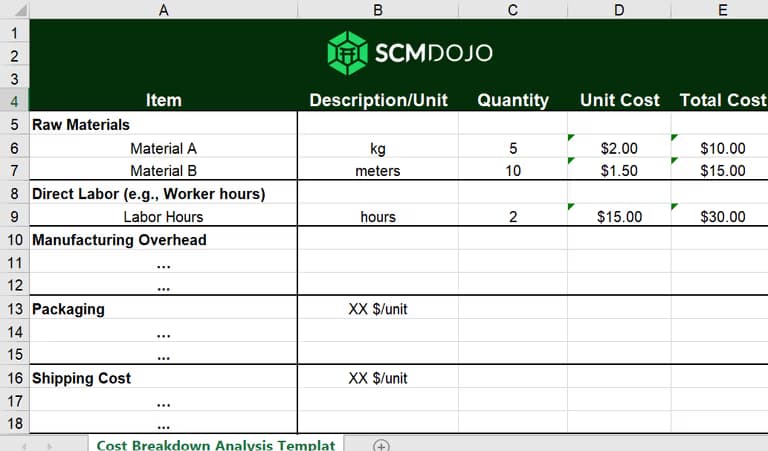
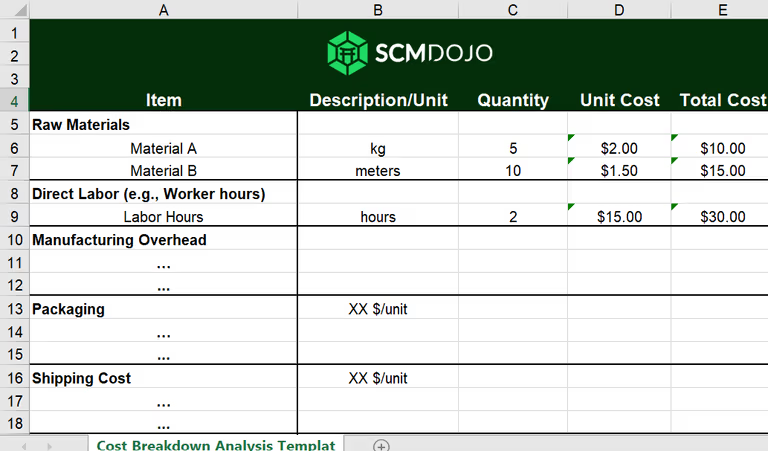
Raw Materials Cost Section
Line-by-line breakdown of material inputs, unit costs, and quantities. The foundation of any credible cost model.
Labour Cost Breakdown
Capture direct labour hours, rates, and overhead allocations. Separate controllable labour costs from fixed ones.
Logistics & Freight Costs
Factor in transportation, customs, and last-mile delivery costs. Often overlooked, always significant.
Overhead Allocation
Structured fields for factory overhead, quality costs, and administrative allocations. Full cost visibility, not just direct spend.
Profit Margin Analysis
See exactly what margin is embedded in a supplier quote. Use this to negotiate from an informed position rather than guessing.
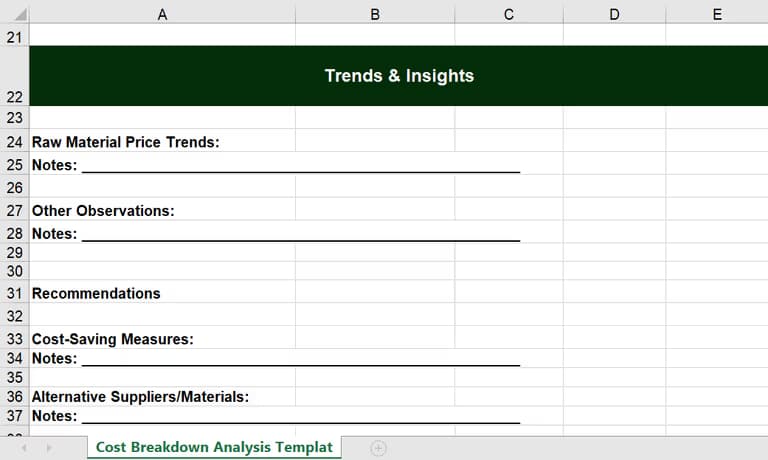
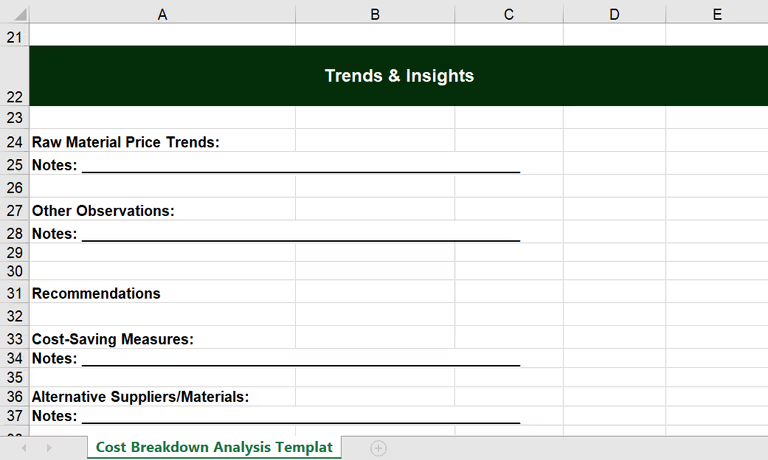
Raw Material Price Trend Section
Track how key input costs move over time. Spot upward trends before they hit your next supplier invoice.
Automated Cost Calculations
Pre-built formulas compute total costs, component percentages, and cost driver summaries automatically. No manual arithmetic needed.
Recommendations & Insights Section
Dedicated space to document cost-saving strategies, alternative sourcing options, and negotiation priorities. Ready to share with leadership.
A clear visual of every cost component your team needs to see
A structured cost breakdown view makes supplier negotiations faster, more credible, and grounded in data rather than estimates.
See what you'll be working with
Here is a closer look at the template layout and how the cost breakdown structure maps to real procurement workflows.

Designed for procurement practitioners.
Not finance software specialists.
Comprehensive cost breakdown
Covers raw materials, labour, logistics, overheads, and profit margins in one structured file. Nothing falls through the gaps.
Automated calculations
Pre-built formulas compute totals, percentages, and cost driver summaries. Enter your numbers and the analysis builds itself.
Customisable fields
Adapt categories, labels, and cost lines to match your specific products, categories, and supplier structures. It's your template.
Price trend tracking
Dedicated section to monitor raw material price movements over time. Know when to hedge, when to push back, and when to lock in rates.
Actionable insights space
Built-in section to document cost-saving recommendations and sourcing alternatives. Turns analysis into a plan of action.
Collaboration ready
Works in Excel and Google Sheets. Share with finance, engineering, or operations and gather input in a single, consistent format.
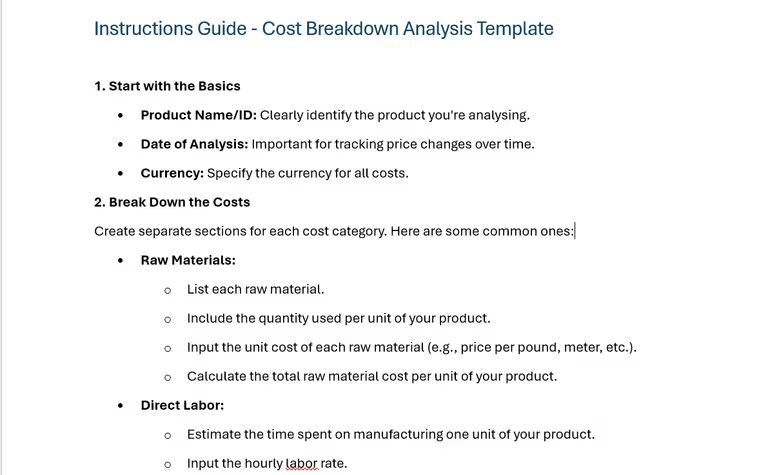
From blank template to cost insight in four steps
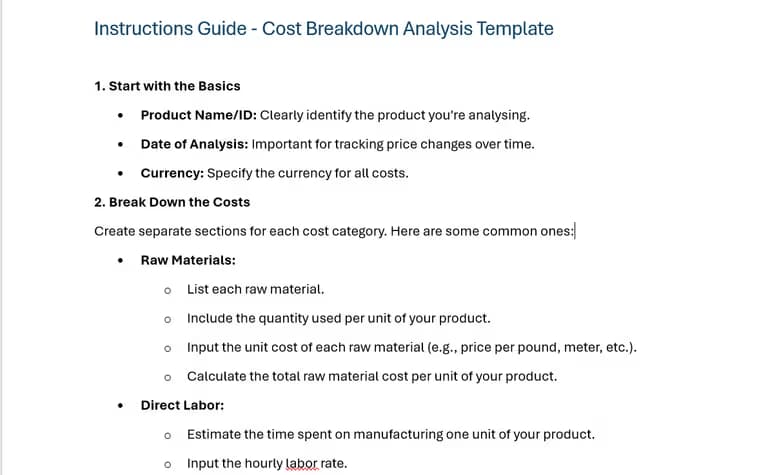
Select your product
Choose the product or component you want to analyse. Gather your supplier quotes and available cost data.
Enter cost data
Fill in the structured fields for materials, labour, logistics, and overheads. Formulas handle the rest.
Review cost drivers
Identify which components drive the most cost. Check the trend section for any material price escalation.
Document & share
Add your recommendations, share with your team, and walk into supplier negotiations with a structured cost model in hand.
Built for the people who have to
justify costs to finance and leadership
Walk into supplier negotiations with a full cost model
Know exactly which cost components are negotiable. Stop accepting price increases without a structured challenge.
Understand your product cost structure before launch
Model cost scenarios for new products. Identify where design changes could reduce cost before you go to market.
Support cost forecasting with a clear, standard format
Get consistent cost data from procurement in one standardised format. Easier to consolidate into financial forecasts.
Get competitive on pricing without sacrificing margin
Understand your true cost base. Price confidently and spot where you can reduce cost without cutting quality.
Every cost breakdown question people ask,
answered by your own data
Procurement teams and finance functions search for structured approaches to cost breakdown analysis. This template gives you the framework to answer all of these questions, consistently, using your own product and supplier data.
It is the process of decomposing a product or supplier quote into its component costs: materials, labour, logistics, overheads, and margin. This gives you facts to negotiate with rather than a single opaque price.
Start with the major cost categories, assign line items to each, apply the supplier's quantities and rates, then calculate totals. This template gives you the structure pre-built, just fill in your numbers.
It shifts the conversation from "your price is too high" to "your material cost is X and your margin is Y, let's discuss both." Suppliers respond very differently when you arrive with a cost model.
Should-cost builds a target cost from the ground up. Cost breakdown analysis decomposes what a supplier is actually charging. Both use the same cost categories, this template supports both approaches.
No. Excel remains the most widely used tool for cost modelling globally. A well-structured template covers everything most procurement teams need, without the IT overhead or licence cost.
At minimum: raw materials, direct labour, logistics, overheads, and supplier margin. This template includes all five, plus a trend analysis section for raw material price tracking.
Built by a practitioner who has lived
the cost modelling challenge firsthand

Before you buy
What does the cost breakdown analysis template include?
Structured sections for raw materials, labour, logistics, overheads, and profit margins, plus automated calculations and a raw material price trend section.
Does it work in Google Sheets as well as Excel?
Yes. The template is compatible with both Excel (.xlsx) and Google Sheets. Upload the file to Google Drive and open it directly in Sheets.
Can I use this for multiple products or suppliers?
Yes. Duplicate the sheet for each product or supplier quote. The fields and formulas are fully customisable to fit your specific context.
I'm not an Excel expert. Is this template easy to use?
Yes. The formulas are pre-built. You fill in the cost data and the template calculates totals automatically. Basic Excel familiarity is all you need.
How is this different from a standard price comparison spreadsheet?
A price comparison lists totals. This template breaks down what is inside the price, materials, labour, overhead, margin, so you can challenge each component separately during negotiation.
What format will I receive after purchase?
An instant download link to the .xlsx file, also sent to your email. Works on Excel 2016 or later (Windows and Mac) and Google Sheets.
Can I share this with my team or use it across my organisation?
Yes, for internal use within your organisation. For wider distribution or resale, contact us at [email protected].

See exactly where your costs are coming from.
Download the SCMDOJO Cost Breakdown Analysis Template and give your procurement team the structure to negotiate, forecast, and save, starting today.
Instant download · Excel (.xlsx) · Google Sheets compatible · Lifetime access · No subscription


