The Definitive Guide to Warehousing That Turns a Storage Facility into a Strategic Asset
A comprehensive resource for logistics and supply chain professionals. This guide covers warehouse design and layout, the five core warehouse activities, inventory management and control, safety and material handling, WMS and automation, robotics, sustainable warehousing, and the emerging trends shaping distribution centres next.
Instant download · E-Book · 165+ pages · Lifetime access

An inefficient warehouse does not show up as a warehouse problem.
It shows up as cost, delay and lost customers.
Five pillars that move a storage facility into a strategic asset
In today's business landscape, an inefficient warehouse will cost you time, money and customer satisfaction. Disorganised aisles, slow picking times, inaccurate inventory and safety hazards are not separate issues, they are the same issue seen from different docks: a warehouse that has never been designed as part of the supply chain.
This guide equips you to transform your warehouse from a simple storage facility into a strategic asset that drives efficiency, accuracy and profitability. It starts with the fundamentals of modern warehousing, the different warehouse types, core activities and the design principles that optimise space and workflow.
It then names the obstacles most sites actually hit, inefficient layouts, outdated practices and a lack of technology adoption, and gives the strategies that overcome them. Finally it takes you forward into automation, robotics and data analytics.
The whole book is built on five pillars: solid foundations, strategic space utilisation, streamlined processes, safety first, and embracing technology. Read in order, they take you from a warehouse that works to one that competes.
Solid foundations
The core principles of warehouse operations, design and inventory management, before any tooling decisions.
Strategic space utilisation
Optimise the layout to maximise efficiency and minimise travel time, including 17 space-saving strategies.
Streamlined processes
Best practices for receiving, picking, packing and shipping, so accuracy and speed stop trading off.
Safety first
A safe working environment built on proper training and procedures that reduce accidents and injuries.
One hundred and sixty-five pages from warehouse types to digital twins
An introduction and four chapters, each broken into short, referenced sections, so a supervisor can be sent to one page rather than a whole book.
The evolving role of warehousing
From warehouse-as-storage to the strategic warehouse: value creation, why it matters in today's supply chains, and the key challenges and trends shaping it.
Warehouse operations
Distribution, fulfilment, public, contract, private, cold storage, cross-docking and production warehouses, plus value-added services like kitting, assembly and labelling.
The five basic warehouse activities
Receiving and put-away, storage and picking, packing, shipping and inventory management, and how they differ by warehouse type.
Layout optimisation and inventory control
Why layout matters, the design principles behind it, 17 space-saving strategies, 10 inventory control techniques and 7 proven inventory management KPIs.
Efficiency, accuracy, safety and material handling
Receiving and put-away processes, order picking strategies, packing and shipping, safe and timely delivery, common accidents with causes and prevention, safety regulation and compliance.
Business continuity and the safety checklist
Disaster recovery planning for a site that cannot stop, plus a full warehouse safety checklist you can run on the next walk-through.
Advanced strategies: automation, robotics, sustainability
What a WMS is and what automation delivers, the five challenges of WMS and automation, types and applications of warehouse robots, and energy-efficient, waste-reducing practice.
Emerging trends and the recommended toolkit
E-commerce and omni-channel fulfilment, disruption and resilience, predictive analytics, digital twins, AI integration and virtual pack configuration, then the SCMDOJO courses and tools worth taking next.
A clear look at what the warehousing guide covers
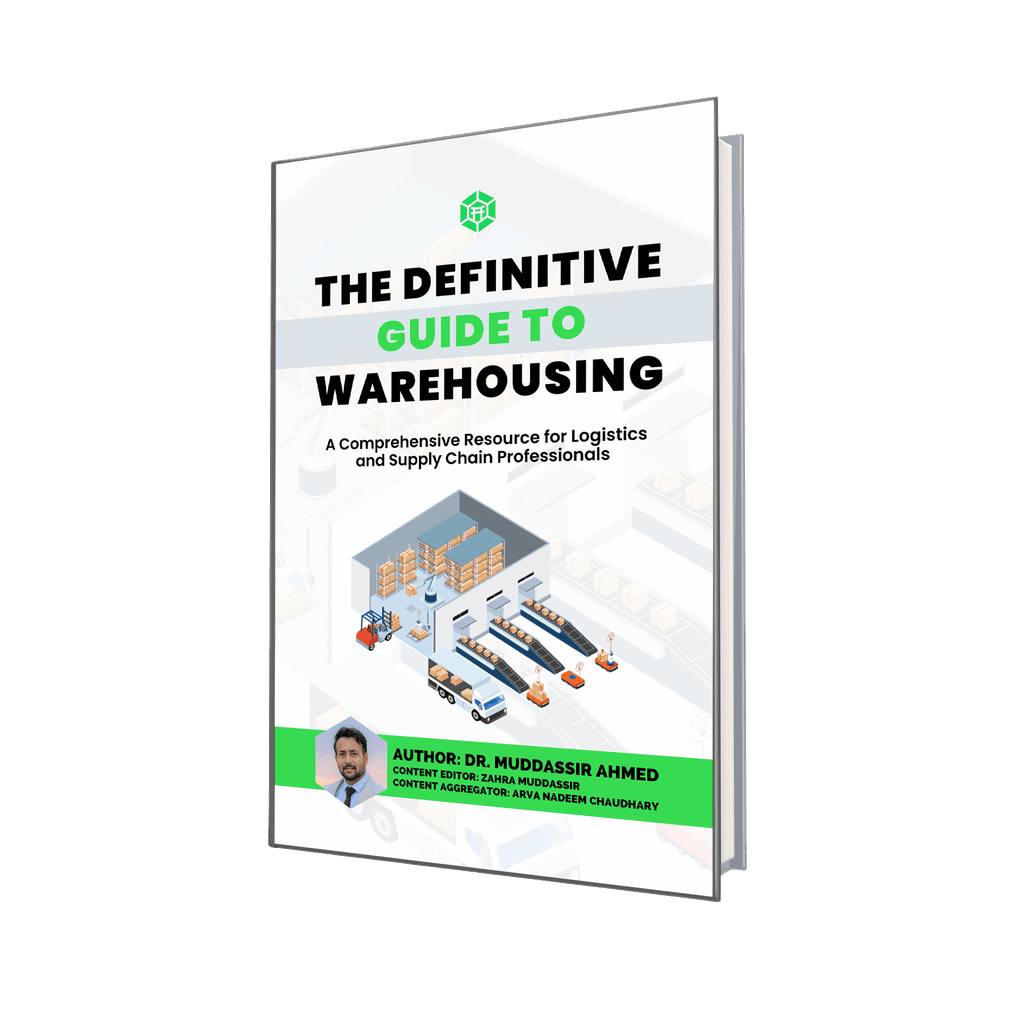
The cover, the preface and the full table of contents from inside the e-book, with page references for every section.


Not a warehouse philosophy book.
A reference with page numbers.
Every warehouse type, and what it changes
Distribution, fulfilment, public, contract, private, cold storage, cross-docking and production, with the activities each one actually runs.
Layout optimisation you can action
Design principles for layout optimisation and 17 space-saving strategies, the section most sites skip straight to.
Inventory control and its KPIs
10 inventory control techniques and 7 proven inventory management KPIs, so improvement is measured rather than claimed.
Safety, compliance and a checklist
Common warehouse accidents with causes and prevention, safety regulation and compliance, safe material handling and a warehouse safety checklist.
Automation without the hype
What a WMS is, the benefits of automation, the five challenges that go with it, and the types and applications of warehouse robots.
The next decade of the four walls
Sustainable warehousing, omni-channel fulfilment, resilience and diversification, predictive analytics, digital twins, AI integration and virtual pack configuration.
Five pillars, in the order a warehouse actually fixes them
Establish solid foundations
Start with the introduction and warehouse types, so the design decisions later are made against what your site is for.
Re-cut the layout
Work through layout optimisation, the design principles and the 17 space-saving strategies before buying anything.
Streamline the five activities
Receiving and put-away, storage and picking, packing, shipping and inventory management, each with its best practice.
Make the site safe and continuous
Run the safety checklist, close the accident causes, and put a disaster recovery plan behind the operation.
Then automate, and plan the next five years
WMS and robotics once the process is sound, then sustainability, omni-channel and the emerging trends chapter.
Written for the people accountable for
what happens inside the four walls
Fix the layout, the pick path and the KPIs
Space-saving strategies, picking strategies and seven inventory KPIs, for the manager measured on throughput and accuracy.
Prevent the accident, not just record it
Common accidents with causes and prevention, safety regulation and compliance, safe material handling and a ready checklist.
Make the warehouse part of the plan
Warehousing as a strategic advantage, with inventory control, business continuity and resilience treated as one system.
Cope with omni-channel without breaking
Fulfilment centre models, the challenges of e-commerce fulfilment, omni-channel strategies and what automation is worth.
Every warehousing question practitioners ask,
answered with a page reference
Warehouse managers, operations leads and logistics professionals searching for warehousing guidance ask these exact questions. This guide gives you a documented answer to all of them.
The evolving role of warehousing, warehouse types and the five core activities, layout optimisation, inventory management and control, safety and material handling, business continuity, WMS and automation, robotics, sustainability, and emerging trends like digital twins and AI integration.
The preface names the four symptoms most sites recognise themselves in, disorganised warehouses, slow picking times, inaccurate inventory and safety hazards, and the guide traces each back to layout, process or technology.
Chapter 1 runs to 17 space-saving strategies alongside the design principles for layout optimisation, covering vertical use, slotting and storage density rather than a bigger building.
Seven proven inventory management KPIs are set out with the inventory control techniques behind them, plus the measures behind accurate receiving, picking, packing and shipping.
Chapter II covers what a WMS is and the benefits of automation, then the five challenges that come with warehouse automation and WMS, so the business case is made honestly.
Robotics and its future trends, sustainable and energy-efficient operations, omni-channel fulfilment, supply chain diversification, predictive analytics, digital twins, AI integration, planogramming and zoning, and virtual pack configuration.
Built by a supply chain practitioner
who has stood in the aisles being measured

Before you buy
What exactly is included in this purchase?
The Definitive Guide to Warehousing: A Comprehensive Resource for Logistics and Supply Chain Professionals, a 165+ page e-book covering an introduction, warehouse operations, advanced warehousing strategies, emerging trends and a chapter of recommended courses and tools.
What format does the guide come in?
A single downloadable archive containing the e-book, delivered instantly after checkout. It reads on a laptop, tablet or phone, and the section page references make it easy to print one topic for the floor.
Who is this e-book written for?
Warehouse and distribution centre managers, operations and health & safety leads, logistics and supply chain managers, and 3PL or e-commerce fulfilment teams who own throughput, accuracy and safety.
Does it cover warehouse safety and compliance?
Yes, in depth. Common warehouse accidents with their causes and prevention, safety regulation and compliance, safe material handling practices, business continuity and disaster recovery planning, and a full warehouse safety checklist.
Will it help me decide on a WMS or robotics?
That is Chapter II: what a WMS is, the benefits of warehouse automation, the five challenges of automation and WMS, the types and applications of warehouse robots, and where robotics is heading.
Is this only for large distribution centres?
No. The guide is written to address the challenges and opportunities faced by businesses of all sizes, from a small startup site to a large enterprise network, and covers public, contract and private warehouse models.
What will I receive after purchase?
Instant access to the e-book from your account, plus a download link sent to your email address. Lifetime access, no subscription.

Stop running your warehouse by memory.
Get the SCMDOJO Definitive Guide to Warehousing and give your operations, safety and planning teams one referenced source of truth, from layout and picking through to WMS, robotics and resilience.
Instant download · E-Book · 165+ pages · Lifetime access · No subscription


