Manage the supply chain the other way around Returns, Recycling and Recovery Without the Chaos
Forward logistics is planned to the minute. Reverse logistics is usually where the planning stops. This guide takes returns, recycling and resource recovery apart chapter by chapter: what drives them, what makes them hard, the step-by-step process from collection to final disposition, the technology that makes it work, and the legal framework you have to comply with along the way.
Instant download · PDF · 41 pages · Lifetime access

Everyone can describe the outbound flow.
Very few can describe what happens when product comes back.
The gap between treating returns as an exception and running them as a system
Reverse logistics is the flow of goods moving away from the customer, back through the chain for returns, refurbishment, recycling or disposal. It is the part of the supply chain most organisations run reactively, absorbed into warehouse overtime and customer service apologies rather than designed as a process.
This guide equips you with the knowledge and strategies to build a robust and efficient system instead. It starts with the fundamentals and a direct comparison with forward logistics, then works through the drivers that are making reverse logistics unavoidable: environmental regulations, consumer demand for sustainability and the economic benefit of recovering value from resources.
It does not skip the hard part. Logistical complexities, cost concerns and a general lack of awareness are dealt with alongside the technological and managerial barriers that stop returns programmes from scaling, and then the process is set out step by step, from collection through inspection, sorting, refurbishment, recycling, disposal and redistribution.
The final chapters cover the technology that makes the process controllable, the best practices for a cost-effective system, the contribution to corporate social responsibility and sustainability goals, and the legal and regulatory landscape governing reverse logistics operations globally and regionally.
The flow, run properly
Collection, inspection, sorting, refurbishment, recycling, disposal and redistribution set out as one continuous process, not seven separate fires.
Forward versus reverse
A comparative view of the two directions, so the differences in demand, predictability, network design and cost behaviour are explicit.
Sustainability you can evidence
How effective reverse logistics feeds corporate social responsibility and sustainability targets through resource optimisation and conservation.
Regulation-aware
The legal and regulatory framework governing reverse logistics operations, and how businesses navigate compliance in practice.
Forty-one pages, from what reverse logistics is to the regulation it has to satisfy
Ten chapters. The fundamentals and the drivers first, then the challenges, the process and the technology, closing with best practices, sustainability impact and the legal framework.
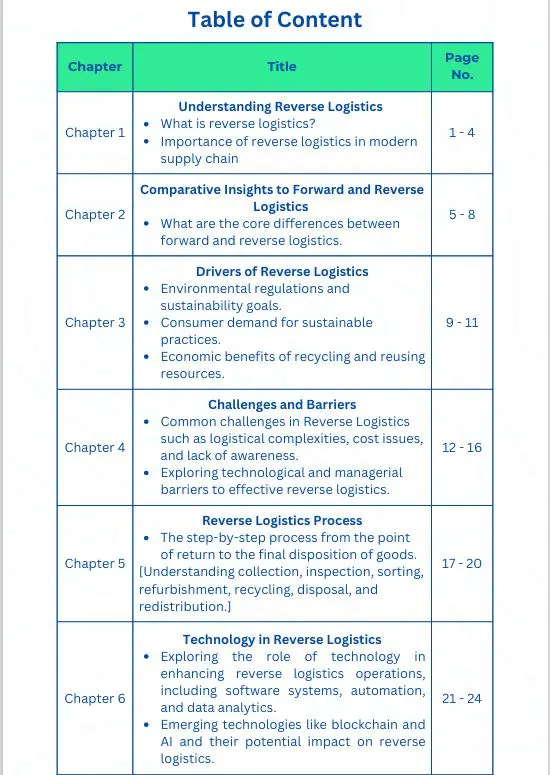
Understanding reverse logistics
What it is, why it matters and how it fits into the modern supply chain. The foundation the rest of the guide is built on.
Comparative insights: forward and reverse logistics
The two directions compared directly, so the differences in flow, planning assumptions and cost behaviour are clear.
The drivers
Environmental regulations and sustainability goals, consumer demand, and the economic benefits of recycling and reusing recovered resources.
Challenges and barriers
Logistical complexities, cost concerns and lack of awareness, plus the technological and managerial barriers that have to be overcome for smooth operations.
The reverse logistics process
The step-by-step flow from product return to final disposition: collection, inspection, sorting, refurbishment, recycling, disposal and redistribution.
Technology
The transformative role of software systems, automation and data analytics, and the potential impact of emerging technologies such as blockchain and AI.
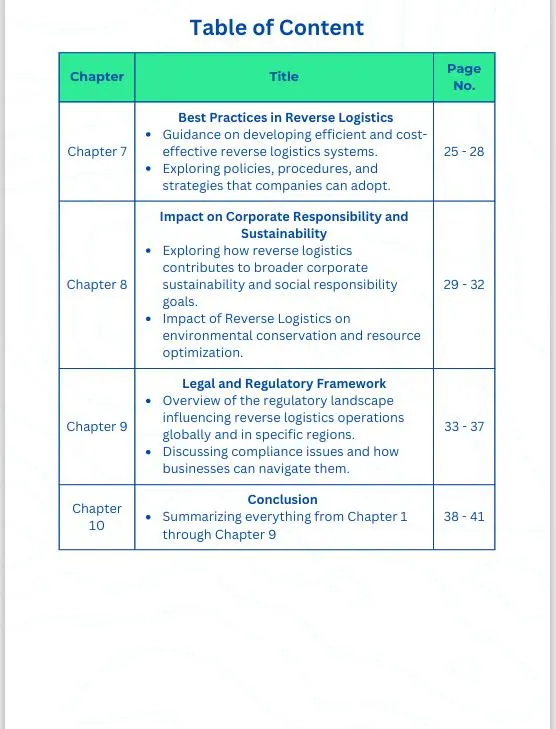
Best practices
Guidance on developing a cost-effective and efficient system, with the policies, procedures and strategies needed for successful implementation.
Corporate responsibility and sustainability
How effective reverse logistics contributes to broader CSR and sustainability goals, promoting environmental conservation and resource optimisation.
The legal and regulatory framework
The regulations governing reverse logistics operations globally and regionally, the compliance issues, and how to navigate them effectively.
Conclusion
Bringing the drivers, process, technology and compliance requirements together into what a robust reverse logistics system actually takes.
The reverse logistics e-book as delivered
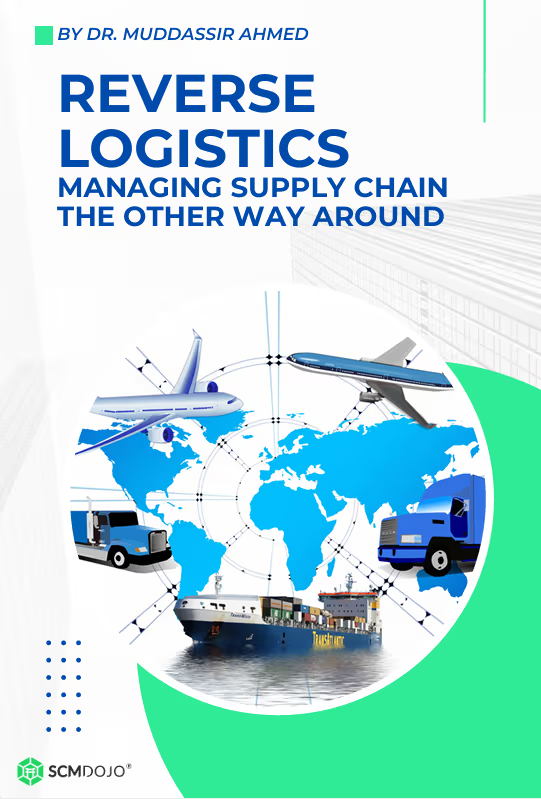
Reverse Logistics: Managing Supply Chain The Other Way Around, by Dr. Muddassir Ahmed. Ten chapters and 41 pages, delivered as a single PDF.
A returns and recovery system you can
actually design, measure and defend.
Fundamentals before tooling
Chapter one establishes what reverse logistics is and why it matters, so the process and technology decisions later rest on a shared definition.
A direct comparison with forward logistics
An entire chapter on how the two directions differ, which is where most of the operational surprises in a returns programme come from.
The process, end to end
Collection, inspection, sorting, refurbishment, recycling, disposal and redistribution, each step treated as part of one designed flow.
Technology, including what is emerging
Software systems, automation and data analytics today, plus the potential impact of blockchain and AI on traceability and recovery decisions.
Sustainability with a mechanism
The link between reverse logistics and corporate responsibility is explained through resource optimisation and environmental conservation, not slogans.
Best practices and compliance together
Policies, procedures and implementation strategies paired with the global and regional regulatory framework the system has to satisfy.
Seven process steps, from the moment
a customer asks for a return
Collection
Get the product back. Where returns are picked up, dropped off or consolidated decides the cost and the cycle time of everything downstream.
Inspection
Establish what condition the item is actually in. This is the decision point that routes everything that follows.
Sorting
Separate recovered goods into disposition paths, so refurbishment, recycling and disposal streams do not contaminate each other.
Refurbishment
Restore value where value can be restored, and know which items justify the labour and which do not.
Recycling
Recover materials from items that cannot be reused or refurbished, keeping value in the chain instead of sending it to waste.
Disposal
Dispose of what genuinely remains within the regulatory framework covered in chapter nine, with the compliance obligations attached to each stream.
Redistribution
Put recovered product back into a channel, closing the loop and turning a cost centre into recovered value.
For the people who own what happens
after the shipment leaves the dock
Design the return flow instead of absorbing it
The process steps, drivers and barriers, so reverse logistics becomes a planned flow with a network behind it rather than unplanned workload.
Turn returns into recovered value
Inspection, sorting, refurbishment and redistribution decisions that determine how much value survives the trip back.
Connect operations to the targets you report
How reverse logistics supports corporate responsibility and sustainability goals through resource optimisation and environmental conservation.
Know the framework before the audit does
The legal and regulatory landscape governing reverse logistics operations globally and regionally, and the compliance issues that follow.
The questions every returns and
recovery programme has to answer
Supply chain, e-commerce and sustainability teams ask these exact questions. This guide answers them chapter by chapter, from fundamentals through to regulation.
The movement of goods away from the customer and back through the supply chain for returns, refurbishment, recycling, disposal or redistribution. Chapter one covers what it is, why it matters and how it sits inside the modern supply chain.
Forward logistics moves predictable volume to known destinations; reverse logistics collects unpredictable volume from dispersed ones and has to decide the disposition of each item. Chapter two compares the two directly.
Three forces, reviewed in chapter three: environmental regulations and corporate sustainability goals, consumer demand for sustainable practices, and the economic benefits of recycling and reusing recovered resources.
Chapter four sets out the obstacles: logistical complexities, cost concerns and a general lack of awareness, compounded by technological and managerial barriers that are harder to see until volumes grow.
Collection, inspection, sorting, refurbishment, recycling, disposal and redistribution, taking product from the point of return through to its final disposition. Chapter five demystifies each step.
Software systems, automation and data analytics make the flow controllable at volume, while blockchain and AI carry potential impact for traceability and disposition decisions, all covered in chapter six.
A supply chain practitioner writing
about the flow most teams never design

Before you buy
What exactly is included in this purchase?
The complete e-book, Reverse Logistics: Managing Supply Chain The Other Way Around, 41 pages across ten chapters, from the fundamentals and drivers through the process, technology and best practices to sustainability impact and the legal and regulatory framework.
What format is the guide in?
PDF, delivered as a single downloadable file of roughly 13 MB. It reads on a laptop, tablet or phone, and the chapter structure makes it easy to work through one section at a time.
Does it cover the full reverse logistics process?
Yes. Chapter five sets out the step-by-step process from product return to final disposition: collection, inspection, sorting, refurbishment, recycling, disposal and redistribution.
Is regulation included, or only operations?
Both. Chapter nine covers the legal and regulatory framework governing reverse logistics operations globally and regionally, including the compliance issues and how businesses navigate them, while chapter eight covers the corporate responsibility and sustainability side.
Is this relevant outside e-commerce returns?
Yes. The drivers chapter covers environmental regulation, sustainability goals and the economics of recycling and reuse, which apply to refurbishment, remanufacturing and end-of-life handling in any industry, not only consumer returns.
What will I receive after purchase?
Instant access to the guide from your account, plus a download link sent to your email address. Lifetime access, no subscription.
Stop treating returns as an exception and design the flow back.
Get Reverse Logistics: Managing Supply Chain The Other Way Around and give your supply chain, operations and sustainability teams the drivers, the process, the technology and the regulatory picture they need to build a robust and efficient system.
Instant download · PDF · 41 pages · Lifetime access · No subscription


