Master Project Cost Estimating and Management Accurate estimates, cost management principles and project success, from the estimate to the closeout
Inaccurate estimates are what turn into cost overruns during execution. This guide covers the principles and the practice: the key concepts and terminology, the types of project cost estimation techniques across fifteen pages, how to deal with uncertainty and risk, how cost is managed throughout the project lifecycle, and how change is handled once the baseline is set. It closes with cost control at closeout and the lessons learnt. Forty-seven pages, seven chapters, by Ravi Nishant.
Instant download · E-Book (PDF) · 47 pages · Lifetime access

Cost overruns are decided early,
while the number is still an estimate.
From the technique behind the forecast to the control that keeps it honest
Project Cost Estimating and Management is a comprehensive guide to the discipline of project cost management, written for the people who have to produce the number and then defend it: project managers, cost estimators and any professional involved in projects.
The book starts where most projects go wrong. Chapter one introduces project cost estimation and management, and chapter two settles the key concepts and terminology, which is the layer that gets skipped before a team argues past each other using the same word to mean two different things.
Chapter three is the heart of it. Fifteen pages on the types of project cost estimation techniques, the advanced methods and best practices behind an accurate forecast, so that no surprises surface during execution. Chapter four then deals with uncertainty and risk, the part of estimating that a single-point number quietly omits.
The rest manages the estimate once the project is running: cost management throughout the project lifecycle, change management and cost control, and a closeout chapter on the lessons learnt, which is where an organization's estimating accuracy either improves or does not.
Estimate with a technique
Fifteen pages on the types of project cost estimation techniques, so a forecast is produced by method rather than by memory.
Present it with confidence
Accurate forecasts that can be defended to stakeholders and clients, with the assumptions and the risk around them stated.
Hold the budget
Cost management through the lifecycle and cost control through change, so the baseline survives contact with the project.
Learn at closeout
Project closeout and lessons learnt, the chapter that decides whether the next estimate is better than this one.
Seven chapters, forty-seven pages,
from the estimate to the lessons learnt
The chapter list and page ranges exactly as printed in the book's own contents table. Chapters one and two build the language, three and four build the estimate, five to seven manage it.
Introduction to Project Cost Estimation and Management (pages 2-4)
What the discipline covers and why the estimate, not the execution, is where the overrun is set.
Key Concepts and Terminology (pages 5-11)
The definitions project cost work is built on, settled before they are used in an argument.
Types of Project Cost Estimation Techniques (pages 12-26)
The longest chapter in the book: the estimation techniques and best practices behind an accurate forecast.
Dealing with Uncertainty and Risk (pages 27-30)
How uncertainty and risk are handled around an estimate rather than folded into a single number.
Cost Management Throughout the Project Lifecycle (pages 31-35)
Managing cost across the phases of a project, from the baseline through to delivery.
Change Management and Cost Control (pages 36-44)
Nine pages on what happens to the cost position when scope changes, and how control is kept.
Project Closeout and Lessons Learnt (pages 45-47)
Closing the project on cost, and the lessons that feed the next estimate.
The e-book as delivered, by Ravi Nishant
Project Cost Estimating and Management (PCEM). Seven chapters and 47 pages, delivered as a single PDF.
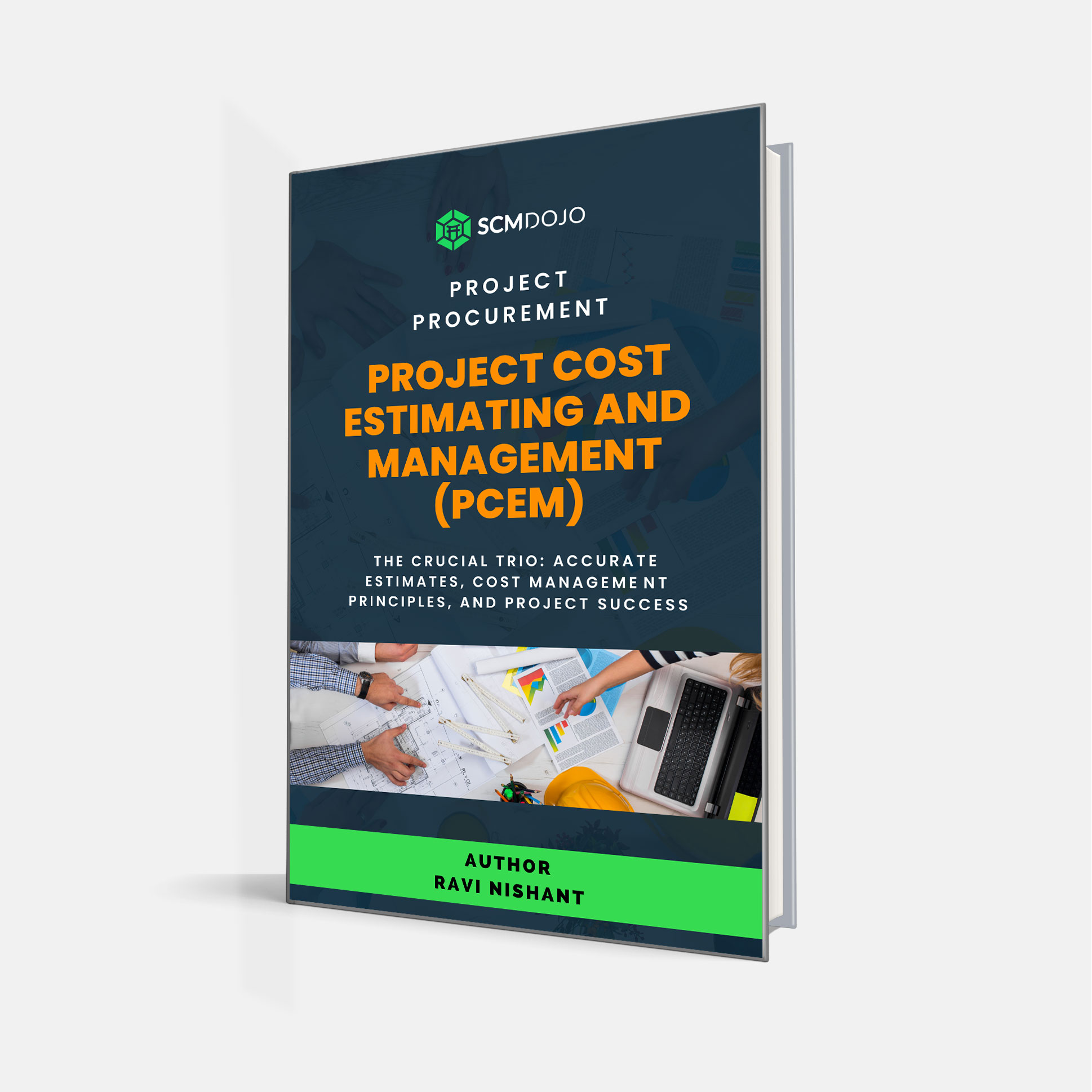

A cost book that spends most of itself
on how the estimate is produced.
Fifteen pages of estimation techniques
Chapter three covers the types of project cost estimation techniques, the largest single section in the book and the one that decides everything after it.
Comprehensive coverage
From cost estimation techniques through effective cost management strategies, change control and closeout, rather than one of them alone.
Uncertainty treated separately
A dedicated chapter on dealing with uncertainty and risk, which is what a single-point estimate normally hides.
Cost control through change
Nine pages on change management and cost control, the phase where an approved budget is most often quietly lost.
Real-world case studies and examples
Practical approach throughout: real-world applications, examples and case studies that show successful cost management in action.
Tools, resources and industry insight
Access to tools and resources designed to streamline estimation and management, alongside current industry trends and best practices.
Six moves from the terminology
to a defensible project cost position
Agree the language first
Chapters one and two cover the introduction and the key concepts and terminology, so the estimate and the budget mean the same thing to everyone reading them.
Pick an estimation technique deliberately
Chapter three sets out the types of project cost estimation techniques across fifteen pages, which is where accuracy is won before execution starts.
Put a range around the number
Chapter four deals with uncertainty and risk, so the forecast presented to stakeholders carries its assumptions rather than hiding them.
Manage cost across the lifecycle
Chapter five covers cost management throughout the project lifecycle, from the baseline through delivery, not only at the approval stage.
Control the cost when scope moves
Chapter six covers change management and cost control, the nine pages that decide whether the baseline survives the project.
Close it out and feed the next estimate
Chapter seven covers project closeout and lessons learnt, which is the mechanism that makes the organization better at estimating over time.
For the people who produce the number
and then have to deliver against it
Deliver on time and within budget
Elevate cost management skills and learn how to deliver projects on time and within budget with confidence.
Refine the technique behind the forecast
Sharper estimation techniques and the ability to present accurate forecasts to stakeholders and clients.
Understand cost management principles
A solid grounding in the principles regardless of your role on the project, and a lift in overall project management capability.
Cost the project you are buying for
Written inside the Project Procurement series: the same estimate discipline applies to capital and project purchases you help specify.
The questions people ask
before they commit to a project cost
Project managers, cost estimators and project professionals ask these about project cost work. Each maps to a chapter in the guide.
The discipline of producing a defensible cost forecast for a project and then holding it through delivery. Chapters one and two introduce it and settle the key concepts and terminology.
Chapter three is devoted to this and is the longest in the book, covering the types of project cost estimation techniques along with the advanced methods and best practices behind an accurate estimate.
Chapter four covers dealing with uncertainty and risk, so the number presented to stakeholders carries its exposure instead of pretending to a precision it does not have.
Throughout. Chapter five covers cost management across the project lifecycle, and chapter six covers change management and cost control once the baseline is under pressure.
Chapter six spends nine pages on change management and cost control, the point at which an approved budget is most often lost.
Chapter seven covers project closeout and lessons learnt, which is where the difference between estimate and actual is captured and fed back into the next forecast.
Seventeen years of sourcing and contracting
for power, fertiliser, PVC and cement plants

Before you buy
What exactly is included in this purchase?
The complete e-book, Project Cost Estimating and Management (PCEM), 47 pages across seven chapters: the introduction, key concepts and terminology, the types of cost estimation techniques, dealing with uncertainty and risk, cost management throughout the project lifecycle, change management and cost control, and project closeout and lessons learnt.
What format is the e-book in?
PDF, delivered as a single file of about 5.4 MB. It reads on a laptop, tablet or phone, needs no special software, and the chapter structure lets you hand the estimation or the control chapter to whoever owns it.
Is this a PMP-style theory book?
No. It is written around practical application: advanced estimation techniques, real-world case studies and examples, and the tools and resources used to streamline cost estimation and management.
Who is this e-book written for?
Aspiring project managers, cost estimators and any project professional who needs a solid understanding of cost management principles, plus procurement and supply chain leads costing project purchases.
Which chapter should I read first if I only read one?
Chapter three, Types of Project Cost Estimation Techniques, at fifteen pages the longest in the book and the one that determines the accuracy of everything downstream.
How long is the e-book?
Forty-seven pages, seven chapters, written to be read end to end once and then used chapter by chapter as a project moves.
What will I receive after purchase?
Instant access to the e-book from your account, plus a download link sent to your email address. Lifetime access, no subscription.


Stop discovering cost overrunsduring execution.
Get the SCMDOJO Project Cost Estimating and Management e-book and put a technique behind the forecast, a range around the risk, and a control plan around the change your project has not met yet.
Instant download · E-Book (PDF) · 47 pages · Lifetime access · No subscription


