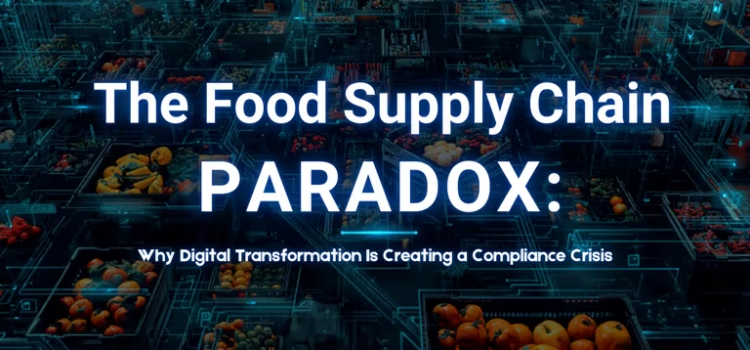
Digital transformation is rewriting how food moves from farm to shelf. AI forecasts demand, automation speeds production, and connected systems promise real-time visibility across suppliers and logistics. Yet beneath the innovation, a quieter crisis is forming one that threatens Food Supply Chain Compliance as systems evolve faster than regulatory controls and audit frameworks can adapt.
Compliance is not keeping pace. As regulations tighten and audit expectations rise, many businesses discover their modern systems cannot prove what matters most: traceability, verification, and defensible records. When digital acceleration outpaces governance, Food Supply Chain Compliance becomes vulnerable.
The Paradox Nobody Planned For: Digital Acceleration, Compliance Breakdown
Food companies are moving fast because pressure is rising from every direction. Consumers expect transparency. Retailers demand data. Competitors streamline operations with automation and predictive tools. Digital transformation seems like the obvious response, especially when margins stay tight and disruption keeps coming.
But Food Supply Chain Compliance does not accelerate at the same speed. Regulations require evidence, not assumptions. Auditors want documented controls, clean traceability, and consistent supplier records. When businesses digitize without redesigning compliance workflows, they often create scattered systems that store data but fail to produce defensible proof.
Many organizations rush into digital transformation without redesigning governance and compliance workflows. If you want to understand how digital systems should be structured to support both operational efficiency and audit readiness, the Supply Chain Digitalization Course provides a practical foundation for aligning technology with traceability and compliance goals.

That is why the compliance crisis is emerging across the food supply chain, and why supplier collaboration platforms are gaining urgency. Tools that centralize supplier onboarding, document collection, specification management, and traceability reporting help teams turn disconnected compliance tasks into one shared system of record.
Why “More Visibility” Doesn’t Equal Traceability You Can Defend
Most transformation programs celebrate visibility first. Teams build dashboards, connect sensors, and pull data into one place. On paper, this looks like progress because leaders can finally “see” inventory movement, supplier activity, and production trends in near real time.
But visibility is not the same as traceability. And traceability is the foundation of strong Food Supply Chain Compliance. Traceability requires provable links between inputs, processes, and outputs, down to lots, batches, dates, and handling events. If those links are missing, a clean dashboard becomes a polished story, not defensible evidence.
This gap shows up in audits. A company may know where the product moved, but still fail to prove why a decision was made, who approved a change, or whether a supplier document was current at the time of shipment. Auditors test structured records the backbone of Food Supply Chain Compliance not summaries.
True compliance-grade traceability means building a system that captures product genealogy, supplier verification, and documentation history as operations run, not after problems surface.
Where Compliance Collapses: The Multi-Tier Supplier Reality
Compliance rarely breaks inside a single facility. It breaks across the supplier network, where standards vary, and oversight weakens with every tier. Tier 1 suppliers may follow clear documentation rules, but their upstream partners often rely on manual logs, shared spreadsheets, or inconsistent labeling practices.
That mismatch creates traceability blind spots. Ingredients get consolidated, repacked, or processed in ways that blur lot-level accountability. Documents arrive late, expire quietly, or sit outside the systems auditors expect to see. When a recall or certification review happens, teams scramble to rebuild the history after the fact.
This multi-tier complexity creates blind spots that directly undermine Food Supply Chain Compliance. Ingredients get consolidated, repacked, or processed in ways that blur lot-level accountability. Documents expire quietly. Records sit outside audit-ready systems. When a recall or certification review happens, teams scramble to rebuild proof after the fact. Without standardized workflows and shared compliance expectations, digital transformation becomes uneven—and Food Supply Chain Compliance collapses where the chain is least visible.
Multi-tier supplier exposure is fundamentally a risk management issue. Strengthening oversight, contingency planning, and control discipline across suppliers is critical to preventing audit failures and recall chaos. The Risk Management and Business Continuity Tactics in Supply Chain course offers structured approaches to identifying supplier risks, designing mitigation plans, and building resilience into complex networks.

The Evidence Problem: Why Audit Failures Often Start With Data Design
Most audit failures do not happen because teams ignore compliance. They happen because systems were designed for operations first, not proof. Digital tools capture activity, but they often miss the specific details regulators need to verify control.
The issue starts with structure. If lot codes are inconsistent, supplier names vary across systems, or product genealogy is incomplete, teams cannot build a clean traceability chain. Even strong internal practices fall apart when identifiers do not match across sites, partners, and shipments.
Documentation creates the second gap. Companies store COAs, certifications, and specs, but they fail to link them to the exact batch, time period, or supplier relationship they are meant to validate. That disconnect makes records look complete while still being unusable in an audit.
The Hidden Risk of AI-Powered Supply Chains: Automation Without Accountability
AI can improve planning, reduce waste, and predict disruptions before they hit. But compliance does not accept “the model said so” as an explanation. When automated systems recommend supplier changes, adjust inventory allocations, or optimize production schedules, regulators still expect clear rationale, documented controls, and human oversight.
That is where risk grows. If teams cannot explain inputs, validate outputs, or track exceptions, automation becomes a compliance weakness. Audit trails must show what happened, why it happened, and who approved it. Without that accountability layer, AI increases speed but also increases exposure.
What Leaders Should Do Next: A Compliance-First Digital Transformation Playbook
Digital transformation only reduces risk when compliance is engineered into the system, not bolted on after rollout. Leaders need to treat traceability, documentation, and supplier verification as design requirements from day one. The goal is simple: make compliance automatic, defensible, and scalable across every tier of the network.
Build Traceability Around Evidence, Not Dashboards
Start with what auditors actually test. Define critical tracking events, required data fields, and proof standards for each product category. Ensure every movement, transformation, and handoff creates a record that links inputs to outputs at the batch level, with timestamps and ownership.
Standardize Supplier Data and Documentation Workflows
Compliance collapses when suppliers submit records in different formats with inconsistent naming and versioning. Standardize templates for COAs, certifications, specs, and corrective actions. Automate validation checks so missing or expired documents trigger alerts before shipments move forward.
Put Governance Around AI and Automation Decisions
AI can optimize supply planning, but compliance demands accountability. Document model inputs, define approval thresholds, and track exceptions. If automation changes suppliers, alters formulations, or reroutes inventory, require logged rationale and human oversight so decisions remain defensible in audits.
Stress-Test Compliance With Audit Simulation and Recall Drills
Do not wait for regulators to expose gaps. Run simulated audits and recall scenarios across multi-tier suppliers. Measure retrieval speed, record completeness, and batch genealogy accuracy. Use results to fix data design problems, close documentation loops, and strengthen control discipline.
Wrapping Up
Digital transformation promises speed and intelligence, but in food, progress collapses when compliance cannot keep up. That is the paradox behind today’s compliance crisis: more technology, yet weaker proof. As regulations tighten, leaders must treat traceability, supplier verification, and audit-ready evidence as core design goals. The winners will digitize for innovation and compliance at the same time.