There are so many different facets and books for Supply Chain Management; it can be overwhelming when it comes to actually choosing which reference book(s) to purchase.
To help readers, I have recommended these 7 Supply Chain Management Books for Beginners. Some readers have asked me if I can recommend Logistics Management books, which led me to write this blog.
In addition to the below-recommended guides, you will find

In this blog, I will present my pick of the 7 Best Logistics Management books. These books, I believe, not only help with theoretical, ideal scenarios but also equip you to tackle and adapt your knowledge to any real-world situation.
1. Lean Supply Chain and Logistics Management (1st Edition): Paul Myerson
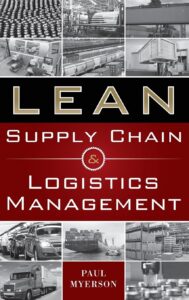
This is the first of two Logistics Management Books by Paul Myerson that I have selected. This book is a must-have for all supply chain practitioners and managers, and if you know someone who is, it will make a perfect gift that will keep on giving!
It brings together Supply Chain Management, Lean, and Logistics in a readable manner that not only engages the reader but, by using real-world examples to explain the theory of logistics, instantly allows you to draw parallels with your own experiences and what you can do to further your knowledge and, if you are a practice manager, provides an excellent reference for practical application on how to drive down cost by understanding and learning how to identify and eliminate waste within your supply chain.
All the basic and advanced Logistics tools are introduced, and there are also many charts and visual aids, further helping the reader visualize the concepts being introduced and put into practice.
This book is perfect for anyone involved in Logistics and Supply chain, whether they are new to the field or experienced practitioners. It focuses on the logistics side of the Supply Chain – for more in-depth and complete coverage of all aspects of the Supply Chain, please refer to his book choice 3: Supply Chain and Logistics Management Made Easy: Methods and Applications for Planning, Operation, Integration, Control and Improvement, and Network Design (1st Edition): Paul A. Myerson.
Check Out Our Logistics Best Practices
2. Warehouse Management: A Complete Guide to Improving Efficiency and Minimizing Costs in the Modern Warehouse (2nd Edition): Gwynne Richards
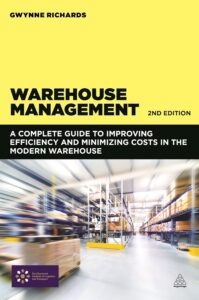
A critical and integral aspect of any supply chain and Logistics is Warehouse management. How successfully warehouses are managed is the key to driving costs down, increasing profit margins, and making your supply chain efficient and successful.
This book by Gwynne Richards provides all the know-how for Warehouse Management and is the perfect manual- albeit a hefty one!
This book covers everything about warehouse management, from the role of the warehouse to comprehensive insights into all related aspects.
I have made a particular reference to ‘Role of the Warehouse’ because, since studying Business Studies in school, I have always found that business is about recognizing and understanding the obvious to make the rest of the complex stages a success. For that, and to put it into words, when you are reading them, you are thinking ‘obviously’, you have to step outside the box to see it. The author does that fantastically well, making this book my go-to reference for Warehouse Management, hence featuring it in my 7 Best Logistics Management Books.

Save $49! Download Free Warehouse Safety Audit Tool
3. Supply Chain and Logistics Management Made Easy: Methods and Applications for Planning, Operation, Integration, Control and Improvement, and Network Design (1st Edition): Paul A. Myerson
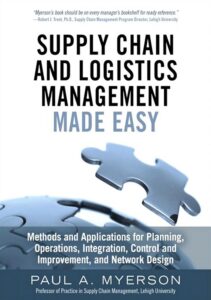
This is the 2nd book by Paul A. Myerson that I have chosen to feature in my 10 Best Logistics Management Books.
This informative and readable book covers the supply chain comprehensively. I wish Mr. Myers had published it during my SCM studies.
This book achieves what many others can hit or miss on – it makes the complex easy to understand. If you are daunted by hearing the words Supply Chain Management, Logistics, Demand, and Supply Planning or, in the first instance, feel you know them but don’t, then look no further for this book breaks these elements down to easy-to-digest concepts that you will continue to remember and understand and apply long after you have finished reading this book.
It’s a must-have for students and practitioners alike.
Download Free Supply Chain KPIs Cheat Sheet PDF
4. Introduction to Logistics Systems Management (2nd Edition): Gianpaolo Ghiani, Gilbert Laporte, Roberto Musmanno
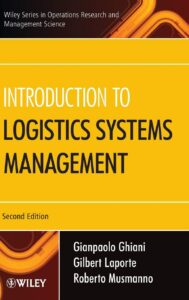
This Logistics Management book is the thoroughly revised version of the author’s 2004 prize-winning 1st edition. So, my impression and expectations at the outset are high.
This book delves into logistics systems management, emphasizing their operation within organizations, aligning with its methodical title.
Tailored for academics and industry practitioners, this Logistics Management book leans towards an academic focus. However, its well-laid-out case studies, updated models, and techniques make it beneficial for both academics and supply chain practitioners.
The case studies, in particular, help you develop your understanding of the topics covered.
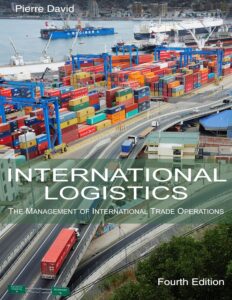
5. International Logistics: The Management of International Trade Operations (4th Edition): Pierre A. David

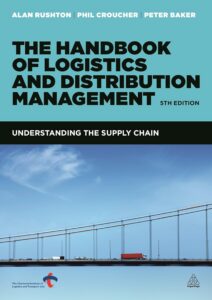
6. The Handbook of Logistics and Distribution Management: Understanding the Supply Chain (5th Edition): Alan Rushton, Phil Croucher, Peter Baker

7. Business Logistics: Supply Chain Management (5th Edition) L Ronald H. Ballou
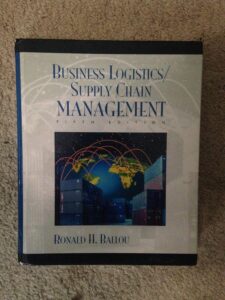
This book is tailored for students like you and offers a comprehensive guide to the world of logistics and supply chain management.
Written by L. Ronald H. Ballou, this fifth edition comes with accompanying software designed to support your learning journey. The software complements the text by providing hands-on practice and reinforcing key concepts.
This book combines theory and practice well, with a clear presentation and user-friendly software. Whether you’re studying in the classroom or on your own, you’ll find this resource invaluable for mastering logistics management.
Business Logistics is highly recommended for students seeking to deepen their understanding of supply chain management. It is the gateway to success in the field.
Save $20! Download Free Supply Chain Terms and Glossary PDF
8. Supply Chain Logistics Management 5th Edition
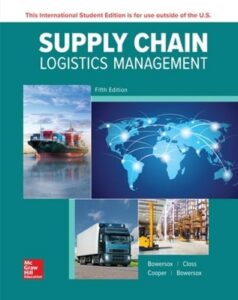
In the fifth edition of Supply Chain Logistics Management by Donald Bowersox, David Closs, and M. Bixby Cooper, you’ll explore how logistics fits into a company’s overall supply chain strategy and operations. The book breaks down supply chain management into easy-to-understand parts.
First, it explains the basics of supply chain management. Then, it discusses the five main parts of logistics operations. Finally, it examines the challenges and strategies for making logistics work smoothly in a global supply chain.
The book also covers administrative challenges, such as how different parts of a company work together, measuring progress, managing risks, and being sustainable.
Throughout the book, you’ll find examples and real-life stories that show how companies handle problems and use logistics to stay ahead. It also talks about how technology helps in this process.
This book, which includes study questions and real-world examples, helps readers understand and succeed in the world of logistics and supply chain management.
9. Operations and Supply Chain Management Essentials You Always Wanted to Know (Self-Learning Management Series)
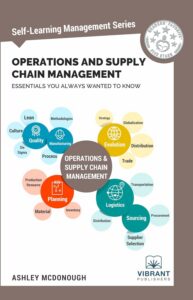
Next up is the Operations and Supply Chain Management Essentials You Always Wanted to Know’! Have you ever wondered what ‘Supply Chain’ or ‘Operations’ really mean? Or why they’re so important? This book is here to answer those questions and more.
After reading this book, you’ll be able to understand the basics of Operations and Supply Chain Management and why they’re crucial. You’ll learn about the different parts of this field and how they work together and with the broader business. Plus, you’ll gain insight into the responsibilities and decisions managers in each area face.
Have you ever thought about how disruptions in the Supply Chain affect businesses and our lives? This book explores that, too.
Using a fictional company and its product as an example, we’ll walk you through how the various parts of the Supply Chain come together to bring a product to market. You’ll see how this company adapts to new demands and challenges to stay afloat.
By the end, you’ll appreciate how logistics, warehouse management, and other activities make everyday products available to us. And you’ll understand why it’s so essential for companies to pay attention to these processes.
Whether you’re new to the field or just looking for a quick overview, this book is for you. It uses simple language and easy-to-understand examples to make Operations and Supply Chain Management accessible to everyone.
10. A Practical Guide to Logistics: An Introduction to Transport, Warehousing, Trade and Distribution 1st Edition
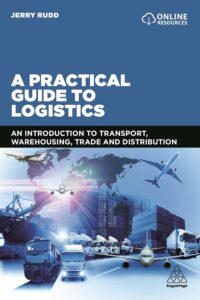
Last but not least is the A Practical Guide to Logistics: An Introduction to Transport, Warehousing, Trade, and Distribution! Whether you’re new to logistics management or looking to expand your understanding, this book is here to help.
Many people enter the field of logistics management without knowing all its details. Some might have experience driving vehicles but know little about warehouses, while others may be in charge of logistics as part of a broader role, like operations. This book aims to bridge those knowledge gaps, offering simple, non-technical explanations and unbiased advice to help readers make informed decisions about their businesses.
Designed as a primer for students embarking on logistics studies or professionals undergoing training, ‘A Practical Guide to Logistics’ covers everything from packaging to transportation, warehousing, and the import/export of goods. With clear explanations and numerous illustrations, this book provides a comprehensive overview of the logistics industry.
Whether you’re just starting or seeking to fill gaps in your knowledge, this straightforward guide is an invaluable resource for anyone involved in logistics. Get ready to dive into the world of logistics and gain a solid understanding of its various aspects.
Frequently Asked Questions (FAQ)
What are the 7 R’s of logistics management?
The 7 R’s of logistics management are:
- Right Product
- Right Quantity
- Right Condition
- Right Place
- Right Time
- Right Customer
- Right Cost
What are the 5 P’s of logistics?
The 5 P’s of logistics are:
People
Processes
Place
Partnerships
Performance
What are the basics of logistics management?
The basics of logistics management include effective planning, efficient execution, and control of the movement and storage of goods, services, and information throughout the supply chain. It encompasses key elements such as transportation, inventory management, warehousing, and coordination with suppliers and customers to ensure timely and cost-effective delivery.
What is 2PL in logistics?
In logistics, 2PL stands for “Second Party Logistics.” It refers to a logistics service provider that primarily offers transportation services. Unlike third-party logistics (3PL) providers that provide a broader range of logistics services, a 2PL provider typically focuses on transportation, such as shipping and delivery, within the supply chain.
What is the best book for someone looking to integrate Lean principles into their logistics operations?
Lean Supply Chain and Logistics Management (1st Edition) by Paul Myerson is highly recommended for this. It expertly bridges supply chain management, Lean methodologies, and logistics. Using real-world examples, it helps managers identify and eliminate waste to drive down costs effectively.
Which logistics book is considered the definitive manual for optimizing warehouse operations?
Gwynne Richards’ Warehouse Management: A Complete Guide to Improving Efficiency and Minimizing Costs in the Modern Warehouse is considered a must-have reference. It covers everything from the foundational role of the warehouse to advanced strategies for driving down costs and increasing profit margins.
Are there recommended logistics management books specifically designed for students?
Yes, there are several great options for students:
- Business Logistics: Supply Chain Management by L. Ronald H. Ballou: Specifically tailored for the student market, this comprehensive guide comes with accompanying software for hands-on practice.
- A Practical Guide to Logistics: This acts as an excellent, non-technical primer for beginners, students, or professionals undergoing training who need to fill knowledge gaps across transport, warehousing, trade, and distribution.
What book should I read to understand global trade and cross-border transportation?
International Logistics: The Management of International Trade Operations by Pierre A. David is the ideal choice. Designed specifically for import/export managers, it provides a concise yet comprehensive look into managing global trade operations, cross-border transportation complexities, and customs regulations.
Which resource provides a simplified, holistic overview of the entire supply chain?
Paul A. Myerson’s Supply Chain and Logistics Management Made Easy breaks down complex elements like demand and supply planning into easy-to-digest concepts. It is highly readable and makes complex supply chain integration and control easy to understand for both beginners and experienced practitioners.
About the Author- Dr Muddassir Ahmed
Dr. Muddassir Ahmed is a globally recognized supply chain expert, thought leader, and keynote speaker. As the Founder & CEO of SCMDOJO, he has built one of the world’s leading platforms dedicated to empowering supply chain professionals with cutting-edge knowledge, practical tools, and access to expert insights. With over 19 years of leadership experience spanning the UK, Europe, the Middle East, and Southeast Asia, Dr. Ahmed has held key roles at Bridgestone, Doncasters Group, Eaton, and Volvo Cars, managing multi-million-dollar supply chain operations.
His expertise spans all facets of supply chain management, with a particular focus on leveraging technology and innovation to optimize processes and build resilient supply chains.
Recognized among the Top 10 Supply Chain Influencers in the World by Supply Chain Digital, Dr. Ahmed has been instrumental in shaping industry best practices through his extensive research, vlogs, and thought leadership. Holding a PhD in Management Science from Lancaster University Management School, he is also a certified Six Sigma Black Belt.
His platform, SCMDOJO, serves a vibrant community with over 51,000 monthly visitors. Moreover, he has 72,000 newsletter subscribers, and a social media following exceeding 105,000 supply chain professionals
A sought-after keynote speaker and thought leader, sharing his insights on industry trends, best practices, and the future of supply chain management. Dr. Ahmed delivers high-impact talks on supply chain excellence, digital transformation, and strategic leadership. His mission is clear: to help supply chains thrive
You can follow him on LinkedIn, Facebook, Twitter