Freight costs can shift quickly, yet many mid-market plants and distribution centers still manage transportation with a small team and spreadsheets. The right managed service can provide execution support, technology, reporting, and carrier oversight without requiring a large internal logistics department.
I compared seven providers based on program scope, technology, governance, and fit for manufacturers and distributors, including those operating in the South and Southeast.

Key Takeaways
- C.H. Robinson fits complex enterprise networks that need broad multimodal and international coverage.
- Uber Freight suits analytics-focused teams looking for benchmarking, dashboards, scorecards, and route-guide reporting.
- TLI stands out for mid-market manufacturers and distributors that want carrier sourcing, execution, freight audit, claims, reporting, and TMS access combined in one program.
- RXO and Penske Logistics address specialized needs. RXO emphasizes control towers and expedite, while Penske can coordinate private fleets with purchased transportation.
- BlueGrace and Schneider offer practical alternatives for multimodal visibility and technology-supported transportation programs.
How I Tested These Managed Transportation Services
Program scope. I favored providers that cover carrier sourcing, tendering, freight audit and payment, claims, and reporting. Services limited to booking loads are closer to brokerage than fully managed transportation.
Technology. I considered whether a TMS was included, what workflows it supported, and whether the provider offered EDI or API connections to customer systems.
Reporting and governance. Useful programs need clear KPIs, accessible reporting, defined ownership, and a regular business-review schedule.
Fit and coverage. I considered how each model fits mid-market manufacturers and distributors, especially teams with multiple plants, distribution centers, vendors, or transportation modes. Features and scope were checked against the providers’ current service materials. Pricing is generally custom and quote-based.
1: TLI
Pros
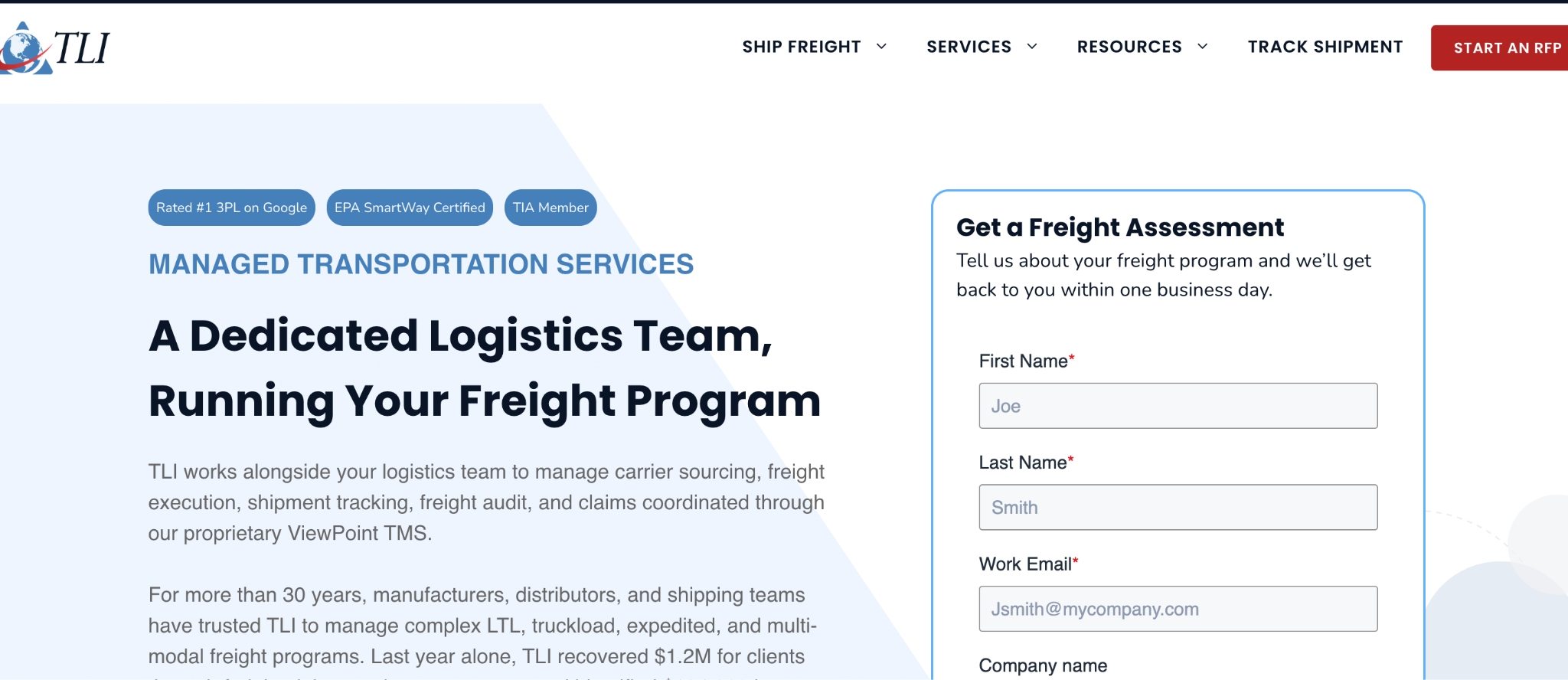
- Manages carrier sourcing, execution, freight audit, claims, and reporting
- Works as an extension of the shipper’s transportation team
- Includes access to ViewPoint TMS for quoting, booking, tracking, claims, and reporting
- Provides an inbound vendor portal for enforcing routing rules
- Builds programs around preferred carriers before adding new capacity
- Turns freight data into spend analysis, carrier performance metrics, and shipment reporting through its business intelligence tools
- Uses a structured process covering discovery, procurement, technology setup, and ongoing reviews
Cons
- Pricing is available only through a custom quote
- Timelines and savings figures on its site are TLI-provided examples, not guaranteed outcomes
- The usual fit is shippers with roughly $1 million or more in annual freight spend
My Experience
TLI‘s program fits mid-market transportation teams well. It covers the work these teams commonly need to offload, including sourcing carriers, tendering shipments, auditing invoices, handling claims, and producing usable reports. It offers broader support than basic brokerage without pushing a shipper into an oversized global program.
I especially liked the combination of ViewPoint TMS and the inbound vendor routing portal. Vendors can book according to the shipper’s routing rules, giving the transportation team better control over inbound cost and visibility. Quoting, booking, tracking, claims, and reporting also stay in one system instead of being split among unrelated tools.
The documented implementation path adds credibility. TLI describes a typical progression from discovery and procurement through technology setup and an ongoing phase with recurring business reviews. That sequence and any stated timeframe should be treated as TLI’s typical process, not a promise, but it gives prospective customers concrete steps to discuss during scoping.
Pricing
Pricing is custom and may use a management fee or a per-shipment margin, depending on the program. Confirm the structure, included services, and expected internal workload before comparing proposals.
The value case is reasonable because TMS access, audit support, claims handling, and reporting can be included in the broader program. Actual value will depend on shipment volume, network complexity, and the responsibilities assigned to TLI.
2: C.H. Robinson
Pros
- Offers TMS, managed transportation, and 4PL service models
- Supports multimodal and international networks
- Connects with ERP systems, carriers, and other transportation platforms
- Provides broad capacity and transportation-management resources
Cons
- The program may be more extensive than a small network requires
- The sales and implementation process can feel enterprise-oriented
My Experience with C.H. Robinson
Navisphere covers workflows beyond basic tendering and is worth considering for networks that cross borders or modes. The provider’s scale can support benchmarking and capacity access. Mid-market buyers should still ask who will manage the account, how support is structured, and how often that team changes.
Pricing
Pricing is custom and based on network size, volume, modes, and service scope.
3: Uber Freight
Pros
- Combines managed services with a transportation platform
- Offers benchmarking, custom reports, and dashboards
- Includes carrier scorecards and route-guide compliance reporting
Cons
- Its platform-led model may offer less tailoring for smaller programs
- Some teams may not use the full analytics set
My Experience with Uber Freight
The analytics are the main reason to shortlist Uber Freight. Route-guide compliance and carrier scorecards help reveal whether the transportation plan is working in daily operations. Buyers should confirm how much dedicated support they receive and whether the platform’s workflow fits their existing processes.
Pricing
Pricing is custom and depends on network characteristics, volume, and required services.

4: RXO

Pros
- Provides control-tower oversight for carriers and vendors
- Supports execution, reporting, audits, payments, and claims
- Offers managed expedite for time-sensitive freight
Cons
- The control-tower model may be excessive for a simple LTL program
- System integration can require detailed preparation
My Experience with RXO
RXO makes the most sense for volatile networks where expedite and centralized oversight matter. Its control-tower approach can reduce handoffs among carriers, vendors, accounting, and claims teams. Discuss ERP field mapping early because integration quality will affect the wider program.
Pricing
Pricing is custom and reflects transportation volume, technology needs, and operating scope.
5: Penske Logistics
Pros
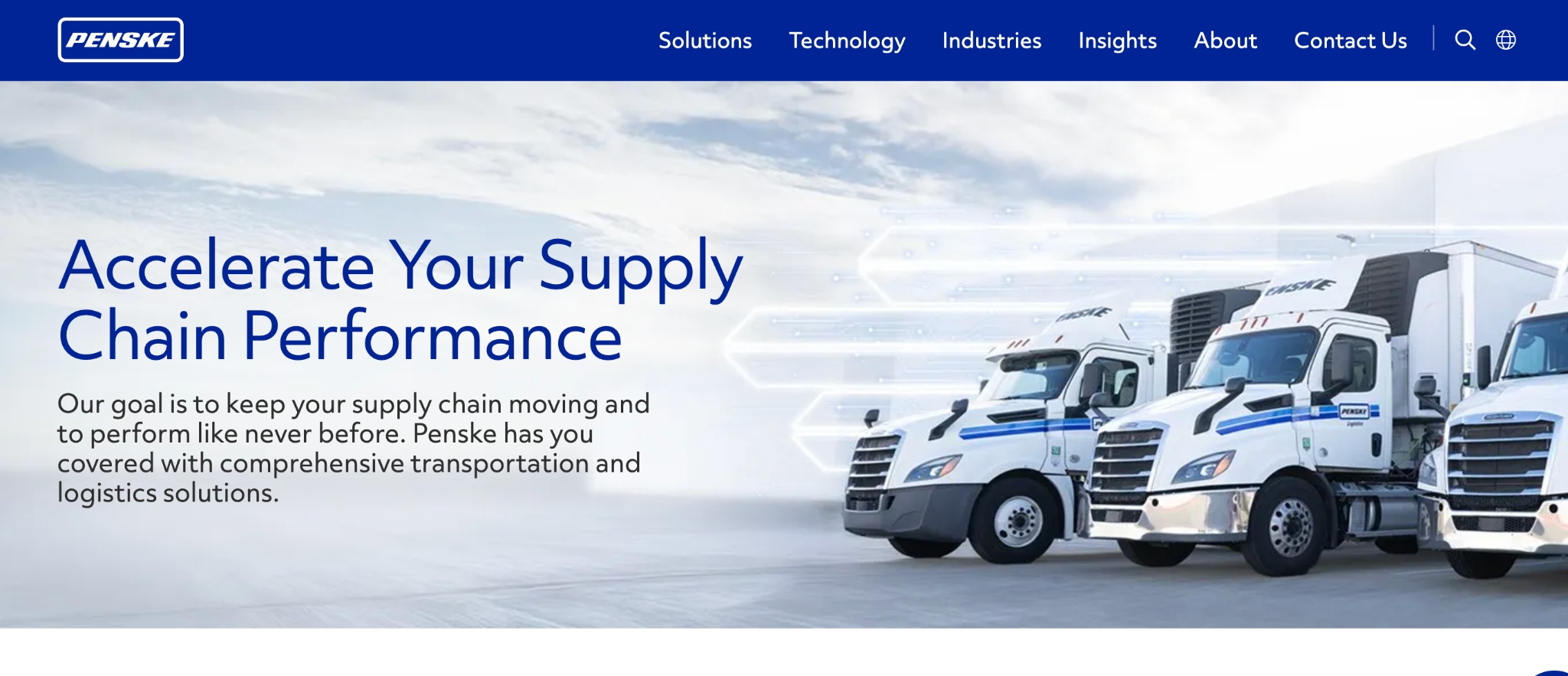
- Manages transportation processes from order through settlement
- Provides shipment and spending visibility
- Can combine dedicated fleets, brokerage, and managed transportation
Cons
- Its broader logistics model may be heavier than some shippers need
- Programs require custom scoping
My Experience with Penske Logistics
Penske is relevant when private-fleet operations must coordinate with overflow, backhauls, and purchased transportation. Keeping those activities with one provider can reduce planning gaps. A specialist may feel simpler for companies without fleet assets or broader logistics requirements.
Pricing
Pricing is custom and shaped by the mix of dedicated, brokerage, and managed services.
6: BlueGrace Logistics
Pros
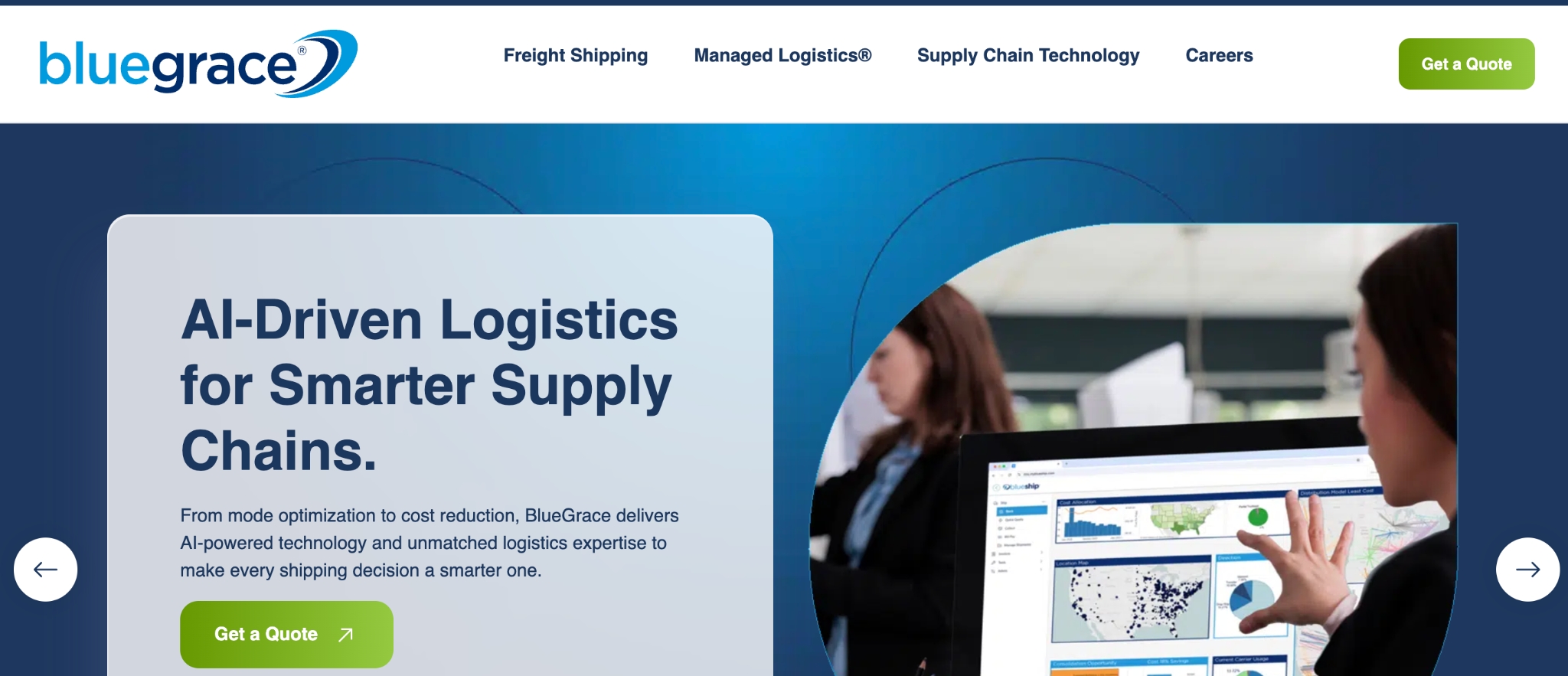
- Offers managed logistics across common transportation modes
- BlueShip TMS provides visibility and connected workflows
- Its model is positioned for mid-market transportation programs
Cons
- Published savings figures should be viewed as benchmarks, not commitments
- Implementation timing varies by program
My Experience with BlueGrace Logistics
BlueGrace presents a practical option for distributors using both LTL and truckload. BlueShip supports the multimodal workflows these shippers commonly need. During scoping, ask who owns each KPI, how often reviews occur, and whether references match your region and mode mix.
Pricing
Pricing is custom and depends on shipment volume, modes, and management requirements.
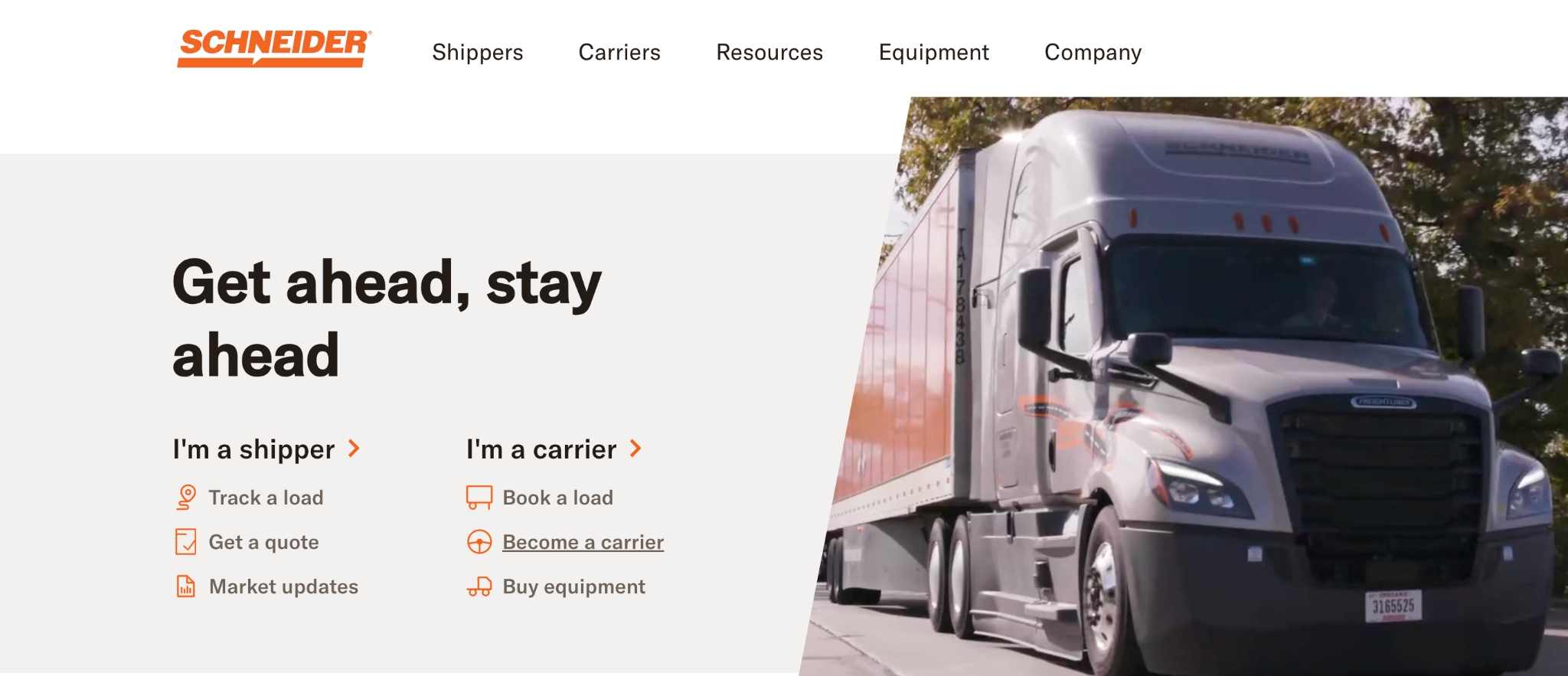
7: Schneider Logistics
Pros
- FreightPower provides shipment, lane, and cost visibility
- Combines transportation technology with a national carrier network
- Supports teams that want capacity plus logistics tools
Cons
- The model may suit platform-comfortable teams better than white-glove buyers
- Service boundaries require careful review
My Experience with Schneider Logistics
Schneider suits teams that already have logistics expertise but want added technology and capacity. FreightPower can help them monitor lanes and changing costs. Buyers seeking complete outsourcing should confirm who owns tendering, freight audit, and claims after implementation.
Pricing
Pricing is custom and based on the transportation network and selected services.
Conclusion
Each of these providers fits a different type of mid-market operation. C.H. Robinson and Uber Freight suit shippers who need enterprise-scale networks or analytics-heavy programs. TLI is a solid fit for manufacturers and distributors that want managed execution, included TMS access, inbound routing controls, reporting, and a documented governance process addressing the practical needs of a lean transportation team.
RXO is worth considering for control-tower and expedite needs, Penske stands out when dedicated fleets and purchased transportation must work together, and BlueGrace and Schneider round out the field for teams that want multimodal visibility without a full-scale enterprise program.
Before choosing, request a written scope, sample KPI report, implementation plan, and clear pricing structure from each finalist. Comparing those documents will show which provider offers the right level of support without relying on unverified savings claims or assumed service coverage.

Frequently Asked Questions (FAQs) About Managed Transportation Services
What is a managed transportation service?
A managed transportation service involves outsourcing key logistics functions to a third-party provider. Rather than just acting as a freight broker to book loads, a fully managed service typically includes carrier sourcing, shipment tendering, freight audit and payment, claims handling, and providing access to a Transportation Management System (TMS) with detailed performance reporting.
How do TLI and C.H. Robinson differ in their managed service models?
- TLI: Best suited for mid-market manufacturers and distributors. It acts as an extension of the shipper’s team, offering TMS access, an inbound vendor routing portal, and comprehensive claims and audit support.
- C.H. Robinson: Geared toward complex, enterprise-scale networks that require broad multimodal and international coverage, offering deeper integration capabilities across global platforms.
Why would a shipper choose Uber Freight over other managed services?
Uber Freight is ideal for transportation teams that are highly focused on data analytics. It offers advanced benchmarking, custom dashboards, carrier scorecards, and route-guide compliance reporting to ensure operational plans match daily execution.
What is a control-tower approach, and which provider offers it?
A control-tower approach provides centralized, real-time oversight of all carriers, vendors, shipments, and claims across a network. RXO emphasizes this model, making it particularly useful for volatile networks that frequently require expedited, time-sensitive freight management.
When should a company consider Penske Logistics for managed transportation?
Penske Logistics is a strong fit for companies that operate their own private or dedicated fleets but also need to coordinate overflow, backhauls, and purchased transportation. By combining fleet management with purchased freight under one provider, shippers can eliminate planning gaps and improve overall logistics efficiency.
What should a mid-market shipper ask for before signing with a managed transportation provider?
Before committing to a provider, a shipper should always request:
- A written statement of work outlining the exact scope of services (e.g., who handles claims and audits).
- A sample Key Performance Indicator (KPI) report.
- A documented implementation timeline and plan.
- A transparent pricing structure (management fee vs. per-shipment margin).