In today’s volatile global economy, supply chains are no longer a back-office function they are a strategic competitive advantage. From geopolitical disruptions and inflationary pressures to digital transformation and sustainability mandates, organizations are under constant pressure to rethink how they source, plan, manufacture, and deliver products. This is where Supply chain consulting firms play a critical role.
Leading supply chain consulting firms help organizations design resilient supply chains, reduce costs, optimize inventory, strengthen supplier networks, and accelerate digital transformation.
For deeper guidance on designing resilient supply chains, check out SCMDOJO’s course How to Create a Supply Chain Strategy, which walks through building strategy, planning frameworks, and performance alignment.

Whether it is improving Sales & Operations Planning (S&OP), redesigning logistics networks, modernizing procurement, or embedding AI into decision-making, the right consulting partner can deliver measurable performance improvements.
SCMDOJO’s The Fundamentals of Sourcing Process course is ideal for understanding strategic sourcing, supplier evaluation, and negotiation best practices.

Traditionally, the market has been dominated by large global players such as Accenture, McKinsey & Company, Boston Consulting Group, Deloitte, and PwC, who support complex, large-scale transformations for multinational enterprises. Alongside them, specialist firms such as GEP and KEPLER focus on procurement, operations, and logistics excellence.
However, a new generation of execution-focused supply chain consulting firms has emerged offering faster results, practitioner-led expertise, and significantly lower cost of engagement. Among these, SCMDOJO stands out by combining hands-on consulting, expert networks, and capability building into a single, integrated model.
This article explores the top supply chain consulting firms shaping the industry today and why modern organizations are increasingly complementing traditional consulting with agile, ROI-driven partners like SCMDOJO.
As recent rankings and industry reviews highlight, a small group of leading firms is setting the pace globally, changing how businesses structure procurement and build more resilient, future‑ready supply chains.
1. Accenture
Accenture is a global professional services and technology firm headquartered in Dublin, Ireland, with roots in Andersen Consulting and its current name adopted in 2001.
Scale and reach
Accenture plc, rooted in the former Andersen Consulting business, adopted its current name in 2001 and is listed on the NYSE (ACN)
The company is led by Chair and CEO Julie Sweet and runs a highly global network of offices serving clients in more than 100 countries.
Accenture helps clients rethink how they buy: from procurement strategy and category management to procure‑to‑pay, supplier risk, and cost‑reduction programs.
2. McKinsey & Company
McKinsey & Company is a global consulting firm that helps large organizations improve how they buy, make, and move what they need, with a strong focus on modern, digital procurement.
Firm identity and leadership
McKinsey & Company, founded in 1926, is based in New York and is widely seen as one of the top management consulting firms worldwide.
The firm has an estimated 40,000–45,000 people, generates around 15–16 billion USD in annual revenue, and runs more than 130 offices serving clients in over 65–70 countries.
Procurement work and capabilities
McKinsey helps clients with strategic sourcing, category management, supplier performance, cost reduction, and redesigning the overall procurement operating model.
Global presence and scale
The firm works across manufacturing, consumer and retail, healthcare, energy, financial services, and the public sector, often on global, multi‑year procurement transformations.
McKinsey advises a very large share of Fortune 100 and other blue‑chip companies, which is why it is frequently treated as a go‑to partner for complex procurement and supply‑chain work.
3. Boston Consulting Group (BCG)
Boston Consulting Group (BCG) is a global strategy consulting firm headquartered in Boston, founded in 1963, and led by CEO Christoph Schweizer.
It is known as one of the top “MBB” firms, advising senior leaders on high‑stakes strategy and transformation topics.
Role in procurement and operations
BCG helps companies rethink how they buy, from sourcing strategy and category plays to supplier management and procurement operating models.
Its teams use digital tools, data, and AI (including an AI negotiation coach) to find savings, manage risk, and boost resilience.
Global footprint and scale
The firm has over 90 offices in more than 50 countries worldwide. It employs roughly 30,000–32,000 people and generates an estimated 11–13.5 billion USD in annual revenue.
4. KEPLER
Kepler is a specialist business consulting firm focused on supply chain, purchasing, operations, and innovation, recognized as a benchmark player in supply chain consulting.
It is headquartered in Paris and operates internationally through offices in Chicago (US), Shanghai (China), and Chennai (India), with 85 employees across three continents.
Firm snapshot and scope
Kepler was founded in 2007 as a multi‑specialist consulting firm dedicated to operational margin optimization.
The firm works mainly with industrial, consumer, and aerospace/automotive clients on topics such as logistics master plans, S&OP, sustainable supply chain, and operational excellence.
Supply chain and logistics services
Kepler’s supply chain practice covers logistics network design, flow strategy, control towers, warehousing and inventory management, S&OP/Master Production Scheduling, and end‑to‑end supply chain management.
It emphasizes mapping physical and information flows, improving responsiveness, raising service level, and optimizing full landed cost while limiting environmental impact and last‑mile footprint.
5. Deloitte
Deloitte is a global professional services network that provides audit, consulting, tax, and advisory services, and is widely regarded as the largest firm in its industry by both revenue and headcount.
It plays a major role in supply chain and procurement consulting, helping large organizations redesign how they source, plan, and run their operations.
Scale and global footprint
Deloitte generates around 70.5 billion USD in global revenue and employs roughly 470,000 people worldwide.
It operates more than 700 offices across over 150 countries and territories on six continents, giving it one of the broadest global footprints in professional services.
Procurement and supply chain focus
Deloitte’s Supply Chain & Network Operations and Sourcing & Procurement practices cover strategy, integrated business planning (IBP/S&OP), network design, logistics, supply risk, digital procurement, and operating‑model transformation.
6. Bain & Company
Bain & Company is a global management consulting firm headquartered in Boston, Massachusetts, founded in 1973 by Bill Bain and known as one of the “Big Three” (MBB) strategy firms.
It is led by Worldwide Managing Partner Christophe De Vusser and advises public, private, and non‑profit organizations on strategy, operations, and transformation.
Scale and reach
Bain has around 19,000 employees and generates an estimated 6–7 billion USD in annual revenue.
The firm operates about 60–65 offices in roughly 40–50 countries, with major hubs in Boston, New York, London, Paris, Hong Kong, and other key global cities.
7. PwC (PricewaterhouseCoopers)
PwC (PricewaterhouseCoopers) is a global professional services network and one of the Big Four, providing assurance, tax, deals, and consulting services to many of the world’s largest companies and public institutions.
The network is coordinated from London and operates with a common purpose to build trust in society and solve important problems.
Scale and global footprint
PwC operates in about 149–160 countries and territories through roughly 720–800 offices, giving it one of the widest geographic reaches in professional services.
The network has more than 370,000 people globally and reported around 55–56 billion USD in revenues in its 2024 financial year.
PwC’s supply chain and operations teams help clients make procurement more future‑proof by combining strategy, process improvement, and technology.
8. KPMG
KPMG is a global network of professional services firms, known as one of the Big Four, that provides audit, tax, and advisory services under the KPMG International brand, headquartered in Amstelveen, Netherlands.
It works with clients in more than 140–150 countries to manage risk, improve performance, and navigate major transformations, including in supply chain and procurement.
Scale and global footprint
The network generates roughly 38–39 billion USD in annual revenue and employs about 275,000–276,000 people worldwide.
KPMG helps clients modernize their purchasing processes and supply chain operations, covering the entire journey from sourcing and contracting through to payment and delivery.
9. GEP
GEP is a global specialist in procurement and supply chain that blends consulting, managed services and its own software to help big companies buy smarter and run more resilient operations.
Scale and reach
GEP started in 1999 as a focused procurement and supply‑chain player and has grown into a multi‑thousand‑person business with a strong tech backbone.
Public profiles suggest it now generates around 1–1.3 billion USD in revenue and employs more than 6,000 people worldwide.
Day to day, GEP helps clients with procurement strategy, strategic sourcing, category management, spend analytics, and supplier and contract management, as well as broader supply‑chain consulting.
10. Capgemini
Capgemini is a global business and technology transformation partner headquartered in Paris, France, known for combining consulting, IT and engineering services to help companies digitize and modernize their operations.
It was founded in 1967 by Serge Kampf and is led today by CEO Aiman Ezzat.
Scale and reach
Capgemini employs around 340,000–420,000 people in more than 50 countries and generates over €20–22 billion in annual revenue.
The group brings together brands such as Capgemini Invent (consulting and innovation), Capgemini Engineering, and Sogeti to cover strategy, digital, cloud, data, AI, and engineering needs end-to-end.
Capgemini helps clients modernize procurement and supply chains through “intelligent operations,” including touchless supply chain planning and next‑gen, digitally enabled procurement services.
SCMDOJO (Boutique Supply Chain Consulting Firm)
SCMDOJO represents a new generation of supply chain consulting firms, designed for organizations that want real execution, fast ROI, and hands-on expertise—without the cost and rigidity of traditional global consultancies.
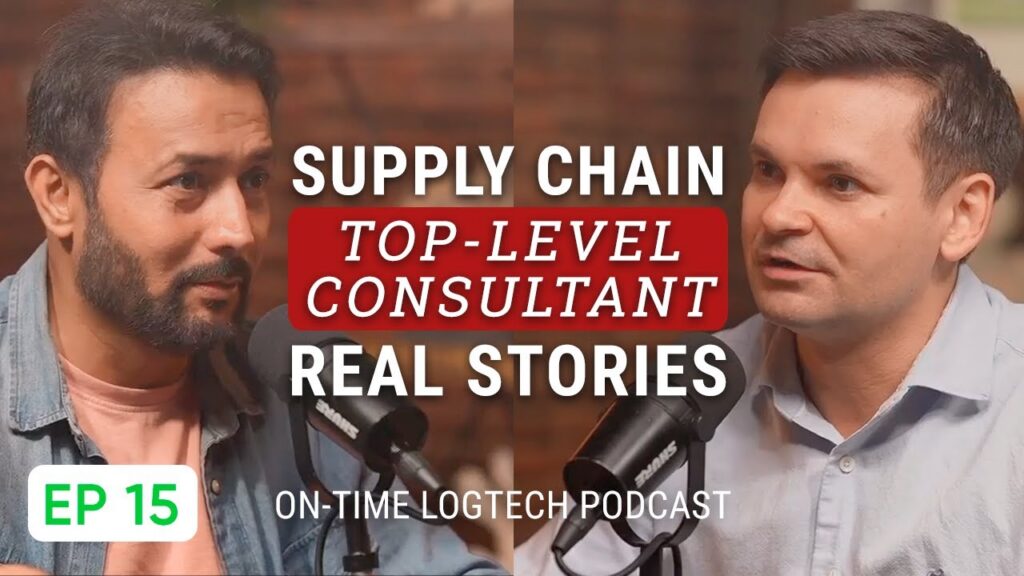
For professionals seeking to excel in this field, watch How to Become a Top-Level Supply Chain Consultant on YouTube to learn the skills, mindset, and career path required to become a high-impact consultant.
Unlike large firms that rely heavily on long transformation programs and junior consulting leverage models, SCMDOJO operates as a practitioner-led consulting platform, giving clients direct access to senior supply chain experts with real operational leadership experience.
What SCMDOJO Specializes In
SCMDOJO delivers targeted, outcome-driven consulting across key supply chain domains, including:
- Supply Chain Strategy & Operating Model Design
- Inventory Planning, Optimization & Working Capital Reduction
- S&OP / Demand Planning Acceleration (S&OP / IBP)
- Procurement & Strategic Sourcing Optimization
- Strategic Procurement & Negotiation Excellence
- Supplier Performance & Development
- Transportation & Freight Cost Optimization
- Supply Chain Digitalization, Analytics & AI Enablement
- Digital Supply Chain Control Tower Implementation
- Warehouse Performance Diagnostic & Improvement
Why SCMDOJO Stands Out Among Supply Chain Consulting Firms
- Practitioner-Led Engagements – Consultants are former supply chain leaders, not career advisors
- Fixed-Scope & Fractional Models – Clients pay for outcomes, not open-ended consulting hours
- Fast Time-to-Value – Projects measured in weeks, not years
- Integrated Capability Building – Consulting combined with training, tools, and best practices
- Cost-Effective Alternative – Enterprise-grade expertise at a fraction of Big-4 or MBB costs
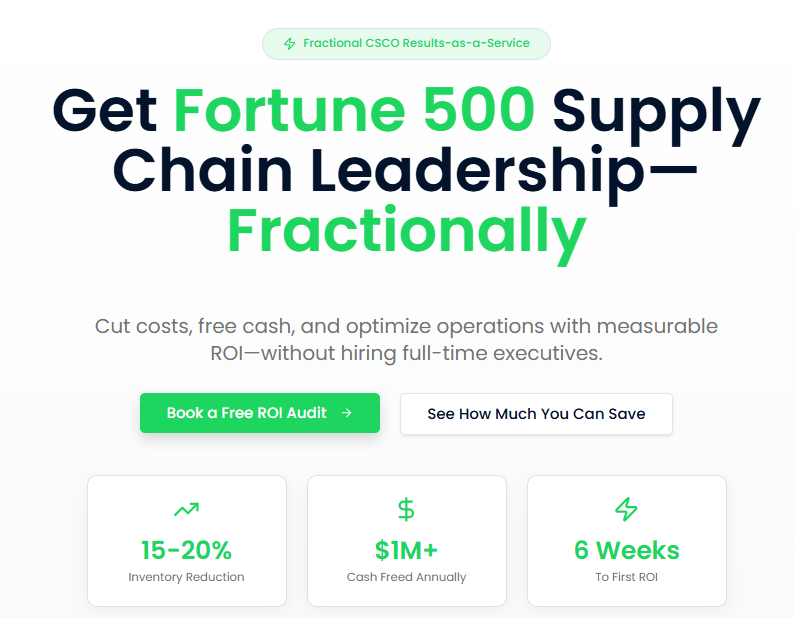
Get Fortune 500 Supply Chain Leadership Fractionally
The SCMDOJO 4-Phase Framework
Every engagement follows our proven framework to guarantee results
Structure + Expertise = Guaranteed Impact
Ideal For
SCMDOJO is particularly well-suited for:
- Mid-market and enterprise organizations seeking execution over theory
- Companies modernizing ERP-enabled but Excel-dependent supply chains
- Leaders who want results + internal capability, not consultant dependency
Trusted by Industry Leaders
Positioning Summary
If traditional supply chain consulting firms focus on strategy decks, SCMDOJO focuses on execution, outcomes, and sustainability of results.
As supply chains become more volatile, digital, and performance-driven, SCMDOJO is increasingly recognized as a credible, agile alternative within the global supply chain consulting landscape.
Choosing the right supply chain consulting firm is no longer about brand recognition alone it is about speed to value, execution capability, and measurable results. While global firms such as Bain & Company, KPMG, and Capgemini continue to play a vital role in large-scale strategy and transformation programs, many organizations are now rethinking how they consume consulting services.
The reality is clear: businesses need practical solutions, not just presentations. They need consultants who understand the real constraints of ERP systems, the trade-offs of inventory decisions, the complexity of supplier behavior, and the operational realities of logistics and planning.
This is where SCMDOJO Supply Chain Consulting Services represent a powerful alternative. By combining:
- Practitioner-led consulting
- Fixed-scope, outcome-driven engagements
- Fractional access to senior supply chain experts
- Integrated learning and capability development
SCMDOJO bridges the gap between strategy and execution. Instead of dependency on long consulting cycles, organizations build internal capability while delivering immediate improvements in cost, service level, inventory turns, and resilience.
For supply chain leaders evaluating supply chain consulting firms, the future lies in a hybrid approach leveraging traditional consulting where scale is required, while partnering with agile, expert-driven platforms like SCMDOJO to deliver faster, more sustainable results.
In a world where supply chain performance defines business success, the smartest organizations are not asking “Which consulting firm is the biggest?” they are asking “Which consulting partner will deliver results that last?”
For those exploring a career in supply chain consulting, check out How to Start a Supply Chain Consultant Career on YouTube to understand entry points, skill-building, and career opportunities.