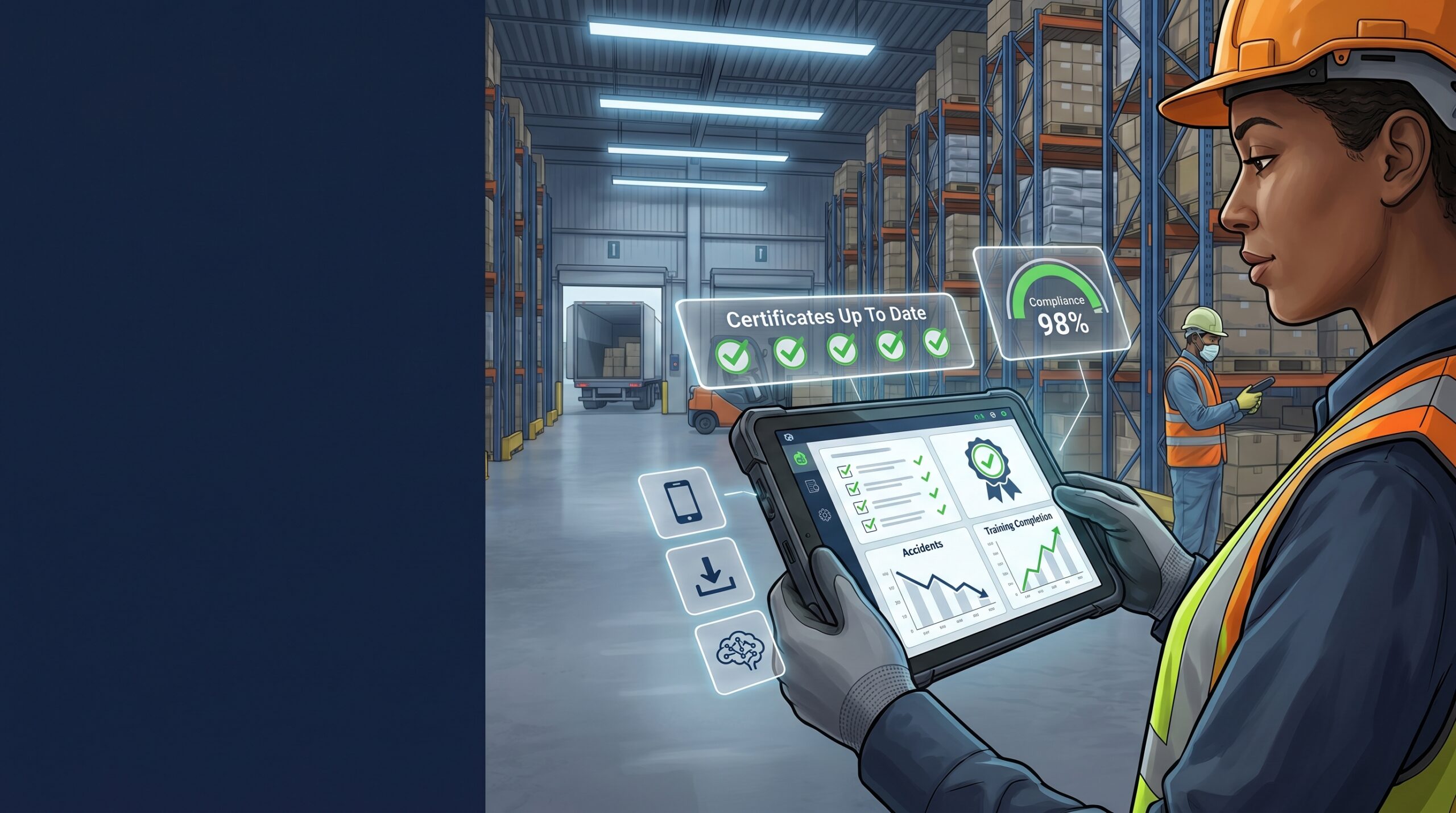
Every missed pick and safety slip drains dollars in seconds. Warehouses run 24/7, trucks stick to tight windows, and regulators fine when certificates lapse.
Training is mission-critical infrastructure. Effective forklift programs alone can cut accident rates by up to 70 percent, preventing injuries and six-figure penalties. Yet generic LMS tools frustrate the shop floor.
This guide compares nine LMS options built for logistics, manufacturing, and distribution crews, scored for compliance strength, mobile access, and frontline ease. You will see how platforms such as GoSkills pair ready-made courses with AI-driven authoring, so your people stay safe, skilled, and on schedule.
How we ranked the platforms
We didn’t pull these rankings out of thin air. Over the past month we sifted through vendor docs, analyst reports, G2 and Capterra scores, and more than 30 Reddit threads where training managers vent or praise their systems. According to a Docebo customer case study, SATO Holdings cut average new-hire onboarding from nine months to four and a half.
To convert that feedback into hard numbers, we built an eight-factor scorecard weighted for supply-chain realities. Compliance strength and frontline usability each carry 20 percent of the total, because missed certificates and clunky interfaces drain money and morale. Mobile or offline access and fast content authoring follow, then integration depth, vendor support, transparent pricing, and long-term scalability.
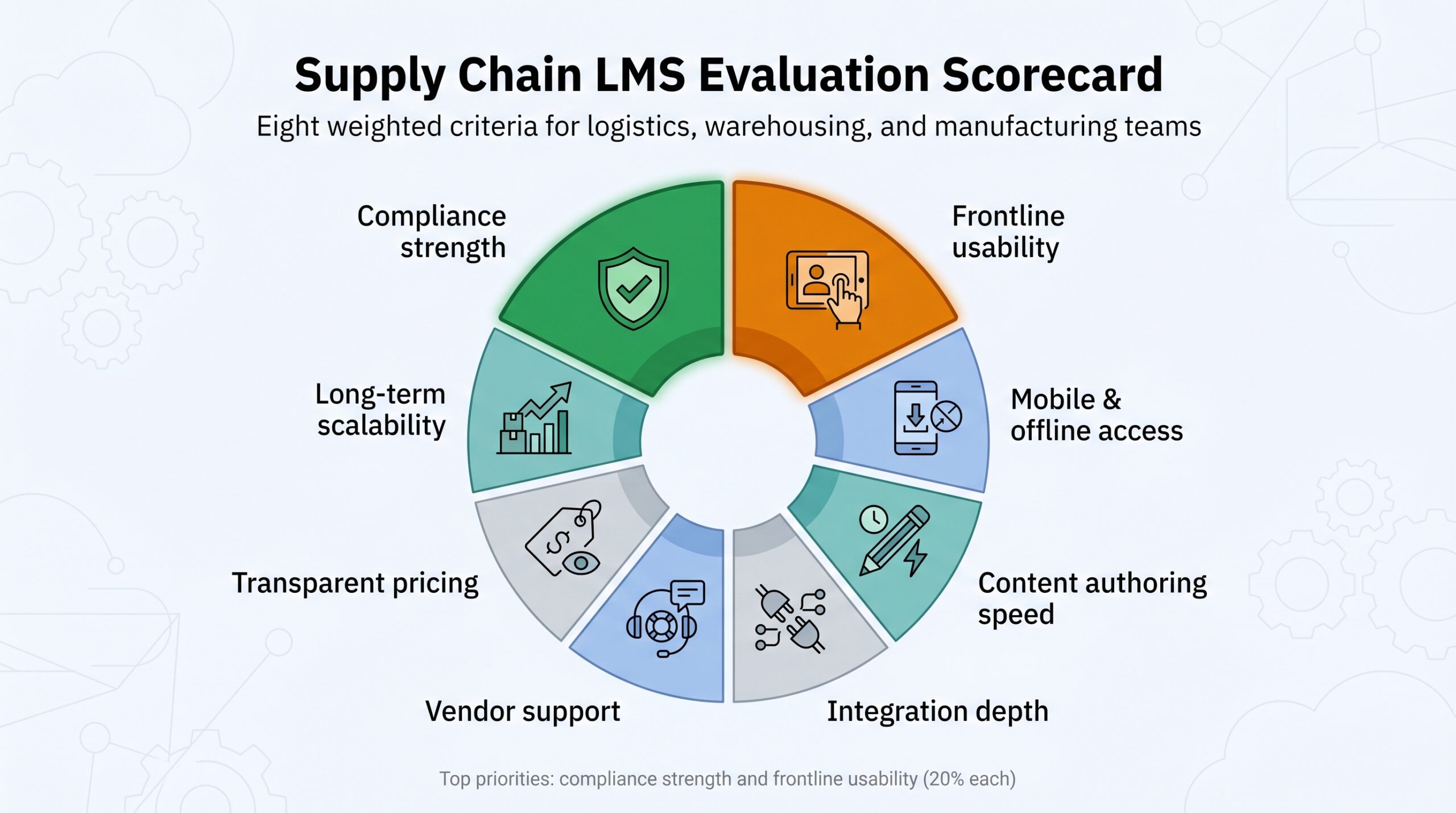
Each platform earned a one-to-five score on every factor, multiplied by its weight, and summed to a clean 100-point total. The higher the score, the higher the rank. What follows isn’t opinion it’s a set of data-driven, shop-floor-tested recommendations you can put to work today.
1. GoSkills LMS: ready-made content at full speed
Picture a new hire finishing mandatory OSHA modules before the first pot of coffee is gone. That is the promise GoSkills offers to supply-chain teams.
The platform opens to a library of bite-sized safety, Excel, and lean manufacturing courses, a breadth outlined in its online learning management system overview. Assign lessons straight from the catalog or tailor them with an AI course builder that creates quizzes and voice-over scripts in minutes. No separate authoring tool. No SCORM headaches. Just click, brand, and publish.
Learners launch a clean mobile app, download lessons for offline viewing, and finish five-minute micro lessons between pick runs. Admins track certificates on a dashboard that flags expirations before they lead to fines. Pricing scales by active user, so small warehouses receive big-company polish without big-company invoices.
What is missing? GoSkills lacks deep HR integrations and complex org charts you may want once headcount climbs into the thousands. For fast-moving operations that put speed first, it delivers a decisive win: compliant, effective training in days, not quarters.

2. TalentLMS: straightforward simplicity for mid-size teams
When you’re juggling shift swaps and last-minute load plans, nobody has time to wrestle with clunky software. TalentLMS keeps things crisp: a five-step setup wizard, a drag-and-drop course builder, and a mobile app your warehouse crew can master before their next break.
The platform balances just-enough power with a refreshingly clean interface. Branches let you carve separate portals for each site or business unit, so Detroit’s plant managers never see Dallas’s driver files. Gamification badges nudge completion rates without feeling gimmicky, while Zoom and HRIS connectors pull rosters in automatically.
Pricing lands in the sweet spot for operations topping a hundred users, roughly the cost of a single pallet jack per month. You’ll get certificates, automated reminders, and multilingual screens, all without hiring an LMS admin.
Trade-offs exist. Deep analytics and forklift-specific content live elsewhere, and offline mode still relies on solid Wi-Fi during sync. If your priority is rolling out mandatory training next week with zero IT tickets, TalentLMS sets the pace.
3. Docebo: enterprise fire-power with AI at the wheel
When you oversee thousands of employees, speed bumps hide in org charts, language packs, and audit trails. Docebo flattens them with an AI engine that automates enrollments, suggests content, and flags skill gaps long before they stall production.
Proof sits in real results. After adoption, SATO Holdings cut average onboarding from nine months to four and a half. That improvement came from live implementation, not a glossy brochure.
Inside the platform, you can train employees, temps, and even 3PL partners from a single dashboard. Rich APIs sync with SAP, Workday, or your WMS, so user lists stay fresh without CSV uploads. Multi-audience portals fence data by brand or facility, while detailed compliance rules auto-assign refreshers the moment a license nears expiration.
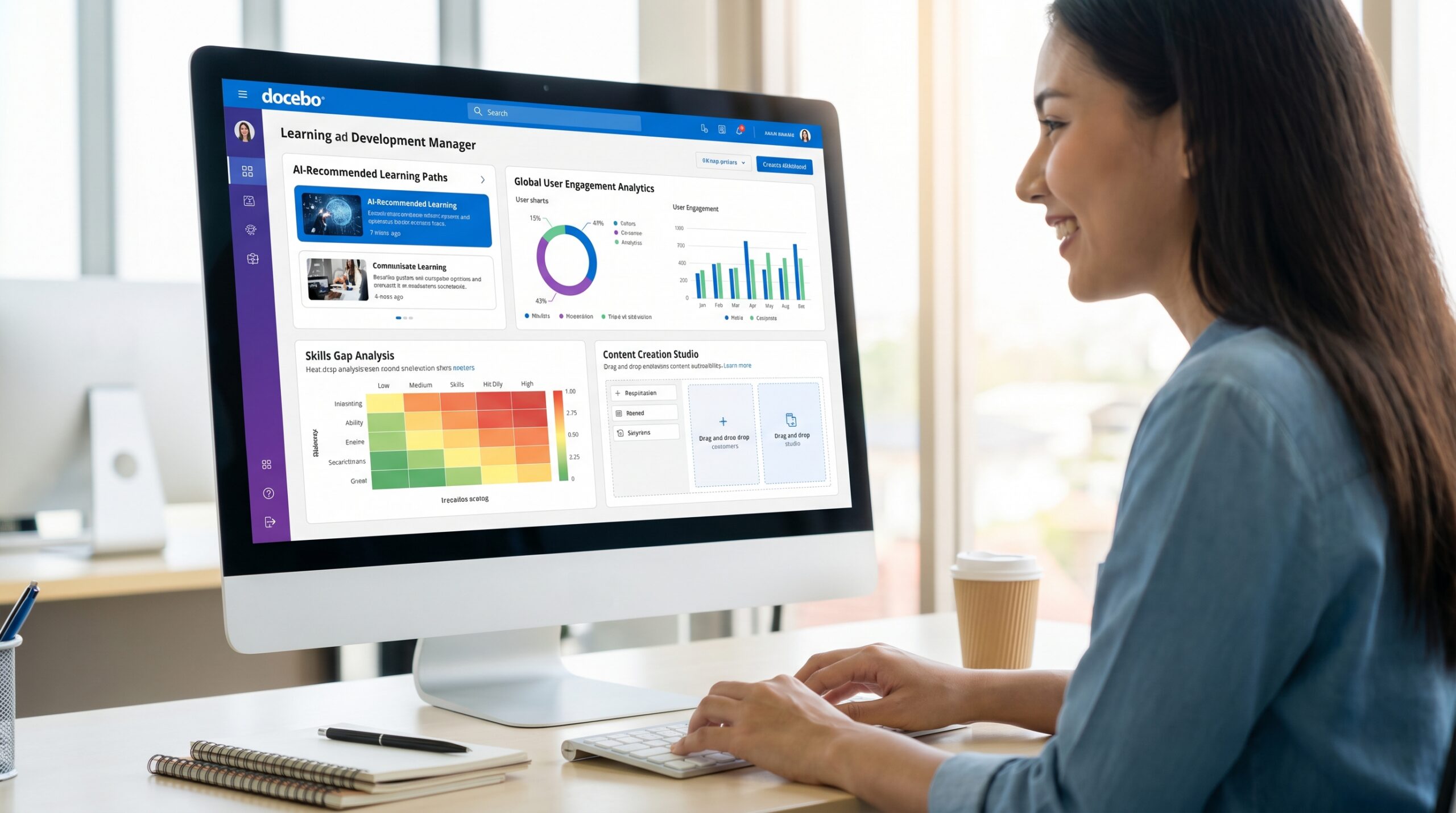
Depth carries weight. Implementation demands planning, and pricing reaches the enterprise tier. Yet for global manufacturers seeking granular analytics and a learning experience that feels personalized at scale, Docebo turns sprawling headcounts into a coordinated, always-certified workforce.
4. SAP SuccessFactors Learning: compliance on autopilot for global giants
If your ERP, payroll, and talent data already live in SAP, keeping training on the same backbone makes sense. SuccessFactors Learning tracks every forklift license, haz-mat certificate, and ISO course so nothing slips through the cracks.
The system links job roles to mandatory curricula, assigns refreshers, and alerts supervisors before a badge expires. SAP positions these features as tools for “strengthening compliance and reducing legal risk with automated regulatory training.”
Because it shares a database with HR, org-chart changes sync instantly. New line operators see the right safety content on day one, while departing temps lose access without manual cleanup. Multilingual screens and deep reporting satisfy auditors in Detroit and Düsseldorf alike.
Be ready, though: the platform’s power carries enterprise weight. Admin menus feel denser than newer SaaS rivals, and first-year rollout often calls for an implementation partner. For Fortune-level manufacturers that depend on zero non-conformances, SuccessFactors changes compliance from a yearly scramble to a quiet background routine.
5. Cornerstone Learning: feature-rich muscle for multi-site networks
Cornerstone works like an all-purpose toolkit for corporate learning. The platform packs in classroom scheduling, competency mapping, a Netflix-sized content marketplace, and skills analytics that connect training to performance KPIs.
For supply-chain leaders running dozens of depots, that breadth matters. You can create separate portals for each facility, push a new lockout tagout course to every maintenance tech overnight, and see compliance dashboards refresh in real time. Integrations stretch from ADP to Teams, so rosters and reminders flow without extra clicks.
Users praise the recent interface update, yet power still brings complexity. Plan for a learning curve and a price tier aimed at enterprise budgets. If you need one platform to train pickers, planners, and plant managers across continents while satisfying auditors, Cornerstone supplies depth few rivals match.
6. Intertek Alchemy: frontline safety, purpose-built
Some platforms adapt to warehouses; Alchemy was born there.
Walk the production floor and you will spot its signature group-training remotes, letting supervisors run a safety session on a TV while every operator records a response with one click. Courses arrive pre-translated, covering OSHA, HACCP, GMP, and the day-to-day realities of conveyors and cold storage. No shoehorning office metaphors into forklift drills.

Managers value the observational checklist app. Scan an employee badge, watch them load a pallet, tap pass or fail. Results sync at once to compliance dashboards that hold up during surprise audits.
Alchemy stays in its lane, so you may need another tool for leadership seminars or deeper analytics. For operations where a glove snag or mislabeled allergen can halt production, this focused LMS delivers what counts: consistent, inspection-ready training in the language of the shop floor.

7. Axonify: daily micro-bursts that stick
Training that appears once a year fades fast. Axonify changes the rhythm by sliding three-question quizzes and micro lessons into each shift, keeping knowledge fresh long after orientation.
The platform’s AI pinpoints gaps for each learner, turning missed answers into tomorrow’s content. Over time that adaptive loop builds muscle memory the way reps build strength. Distribution centers using Axonify report double-digit drops in near-miss incidents because safe habits travel from classroom theory to daily practice.
Everything is mobile first. Associates clock in, tap a tablet kiosk, and finish their learning burst before the conveyor belt even starts. Gamified streaks and leaderboards keep motivation high without cartoon gimmicks.
Remember, Axonify focuses on reinforcement, not full course management. You will still need a traditional LMS for long-form certifications. Pair them and you cover both depth and durability: formal skills plus the everyday nudges that make them stick.
8. EdApp: mobile microlearning on a shoestring
Not every warehouse runs a Fortune-500 budget. EdApp levels the field with a free core plan and a design that feels closer to Duolingo than enterprise software.
You start by choosing a template slide, quiz, or swipe card then add images or short clips from your phone. Ten minutes later you have a forklift-inspection refresher that could pass for agency work.
The learner experience mirrors social apps workers already use. Push notifications land between TikTok pings, lessons open offline, and leaderboards spark friendly rivalry without HR stepping in. SafetyCulture, EdApp’s parent company, even bundles inspection checklists so you can train and verify in one ecosystem.
Agility comes with limits. Complex compliance rules, HR integrations, and advanced analytics remain modest. For small to mid-size fleets seeking quick, polished training without draining cash or time, EdApp delivers more value than its price suggests.
9. Trainual: your SOP playbook, digitized
Ever handed a new picker a dog-eared binder only to watch it gather dust? Trainual trades that relic for a searchable, quiz-ready playbook your crew can open on any device.
Picture Google Docs with accountability. Outline the “how we do things here,” add photos or screen recordings, and tag each article to a role. When HR adds a new warehouse associate, Trainual assigns every required process and tracks completion with quick quizzes.
The interface feels as simple as writing an email. Managers edit steps in minutes, and employees skim short pages during onboarding breaks. Updates publish instantly, so nobody follows an outdated procedure because page 42 never got reprinted.
Limits remain. Trainual lacks SCORM, advanced compliance timers, and multi-tenant walls, so it will not satisfy OSHA recordkeeping alone. Pair it with a formal LMS for certified training and you gain both structure and a dynamic SOP library that grows with your operation.
Scan-at-a-glance comparison
Choosing software often comes down to quick contrasts. Use the grid below to see how each platform stacks up on the factors supply-chain teams care about most: mobile access, compliance strength, AI helpers, price transparency, and our overall score.
LMS | Best for | Mobile / Offline | Compliance tracking | AI / Automation | Starting price* | Our score |
GoSkills | Rapid deployment & ready content | ✅ App + offline | ✅ Certs, expiry alerts | ✅ AI course builder | Low $ per active user | 92 |
TalentLMS | Straightforward rollout | ✅ App (sync required) | ✅ Basic certs | 🚫 | $149 / 40 users / mo | 90 |
Docebo | Enterprise scale & personalization | ✅ App + offline | ✅ Detailed, multi-role | ✅ Learning path AI | Custom quote $$ | 88 |
SAP SuccessFactors | Integrated global compliance | ✅ App | ✅ Automated curricula | ✅ Skill recommendations | Part of SAP suite $$ | 86 |
Cornerstone | Feature depth & content library | ✅ App + offline | ✅ Advanced rules | ✅ Skills graph AI | Enterprise quote $$ | 83 |
Intertek Alchemy | Frontline safety focus | ✅ Kiosk + offline kits | ✅ Audit-ready, OSHA / HACCP | 🚫 | Site license $ | 80 |
Axonify | Daily micro-reinforcement | ✅ App + kiosk | ⚠️ Tracks quizzes only | ✅ Adaptive quizzes | Per user $ | 78 |
EdApp | Free mobile microlearning | ✅ Full offline | ⚠️ Limited reports | 🚫 | Free core / add-ons $ | 76 |
Trainual | SOP documentation | ✅ App | 🚫 No cert tracking | 🚫 | $249 / 25 users / mo | 72 |
*Published pricing or vendor-stated entry tier as of Q2 2026. Real quotes vary by seats and modules.

Scores tie back to the weighted rubric outlined earlier. A green check marks a built-in, production-ready feature; a caution icon shows partial coverage you may need to supplement; a red dash means you will rely on another tool.
Use the chart to shortlist two or three systems, then book vendor demos with the supervisors who will run day-to-day training. A 30-minute hands-on trial often reveals more than any marketing PDF.
Regardless what LMS you choose, you have to create your own supply chain learning content whcih is huge amount of work. Or you have a great choice to acquire SCMDOJO Content via SCMDOJO Business where we have full tech capability to integrate with any LMS.
Integrating or acquiring SCMDOJO content into a company’s Learning Management System (LMS) offers significant advantages, particularly for organizations seeking rapid, practical upskilling in supply chain, procurement, and logistics. SCMDOJO specializes in actionable, expert-led content rather than purely theoretical knowledge, making it a highly effective “plug-and-play” solution for improving operational efficiency.
Key benefits include:
1. Enhanced Training Relevance & Practicality
- Actionable Content: SCMDOJO offers over 72 expert-led courses, 40+ best practices, and templates (KPI dashboards, Excel tools) that can be immediately applied to work scenarios, such as demand planning or procurement negotiations.
- Specialized Focus: Unlike generic platforms, SCMDOJO is focused strictly on supply chain and procurement, ensuring the content is deeply relevant to industry professionals.
- AI-Enabled Upskilling: The content includes modern AI tools and digital assessment capabilities, helping companies align with Industry 4.0 trends.
2. Improved Operational Efficiency & ROI
- Rapid Upskilling: For fast-growing or mid-sized companies (SMEs) that lack internal training resources, integrating SCMDOJO content provides a cost-effective way to train employees without waiting months for content creation.
- Reduced Training Costs: SCMDOJO provides a “Supply Chain as a Service” (SCaaS) model that can help businesses reduce costs by 40-70% through optimized, expert-led practices, according to its documentation.
- Higher Return on Learning Investment (ROLI): Because the content is practical and role-specific, it results in quicker competency, which can improve department efficiency by up to 20%.
3. Streamlined LMS Administration & Customization
- Customizable Curriculum: Companies can curate learning paths, assigning specific courses and best practices to match unique employee roles.
- Unified Tracking: By integrating directly into an existing LMS, companies can track progress, completion rates, and performance analytics through their own system.
- Automated Management: Businesses can establish start/end dates for courses and leverage automatic notifications for improved compliance and deadline management.
4. Credibility and Quality
- Expert-Led Content: Content is created by industry veterans with deep, practical experience, ensuring high-quality, relevant training rather than outdated theory.
- Industry Recognition: The platform offers SCMDOJO certifications in Supply Chain, Procurement, and Logistics management, providing a career-boosting credential that adds value to internal development programs.
- Proven Results: SCMDOJO has worked with global brands such as Dropbox and Musk, indicating suitability for various company sizes.
Conclusion: what’s next for warehouse learning tech
AI will move from novelty to necessity. Course builders that auto-generate forklift modules today will soon personalize entire learning paths using error logs and safety incidents pulled straight from your WMS. Expect the LMS to flag a rising pick-error trend, assign a refresher, and prove the fix in one dashboard.
Immersive training is close behind. VR training in manufacturing has been shown to cut accident rates by roughly 45 percent, giving operators muscle memory without risking product or people. As costs fall, LMS platforms that handle 360-video and simulation scores will outrun those that don’t.
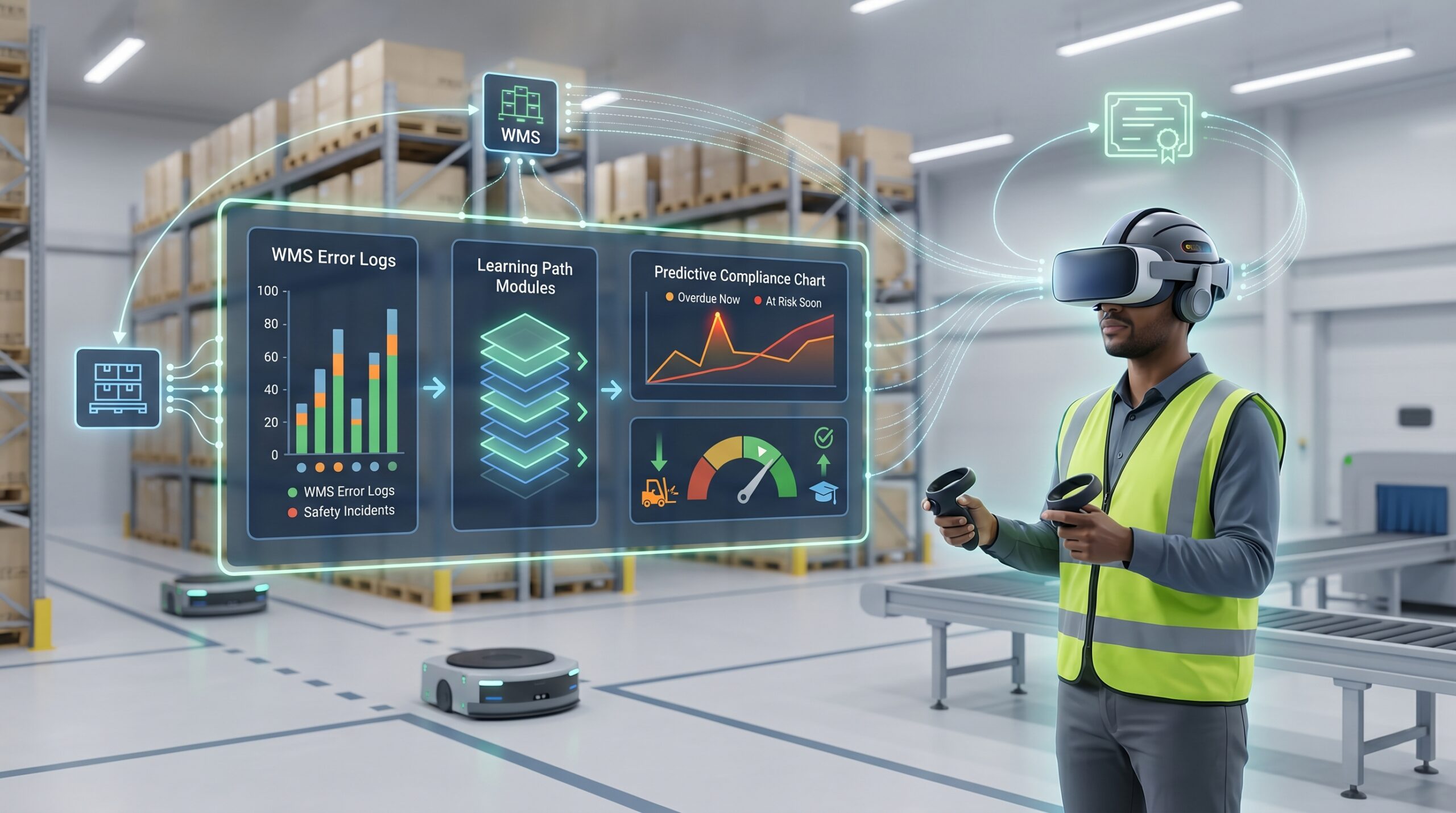
Finally, analytics will turn predictive. Instead of only listing who is overdue, modern systems will forecast who is likely to miss and why, letting you step in before compliance slips and downtime follows.