
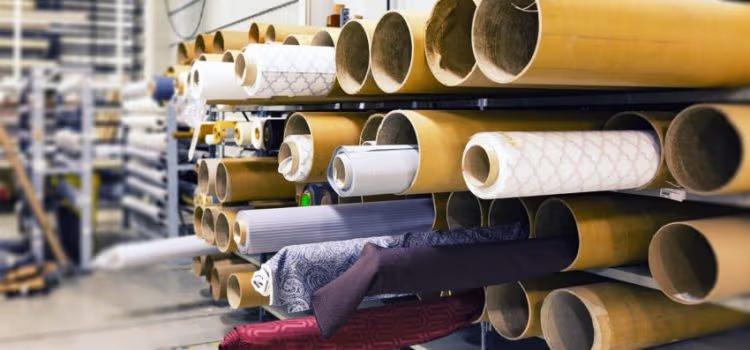
While logistics and supply chain managers tracking Lean operations usually seek to eradicate extra inventory, marketing, and sales programs, which often lead businesses to raise the volume of products they keep in stock, SKU becomes a critical aspect. Big brands with SKU implementation are attaining better evaluation and performance from their inventory with SKU rationalization. The SKU rationalization process has become a definite trend across businesses of all sizes.
The drive towards SKU Rationalization is not in any way new to the system, but in cost-conscious periods, it is getting more scrutiny than ever before. Not so long ago, the Wall Street Journal made a report about industry analysts and executives anticipate larger businesses to scale back on their product assortment by 15%.
Previous research has found that reductions (up to 54%) in the number of low-selling SKUs need not affect perceptions of variety and therefore sales, significantly1. Same Research also indicates that consumers experienced divergent reactions to the reduction in sizes, but they uniformly welcomed the elimination of clutter brought on by the reduction in redundant items.
So, What Defines SKU?
A good definition is given by Investopedia
“A stock keeping unit (SKU) is a product and service identification code for a store or product, often displayed as a machine-readable bar code that helps track the item for inventory. A stock keeping unit (SKU) does not need to be assigned to physical products in inventory”.
Every product or service will have its own unique SKU code so customers/users can quickly identify the difference between products. For instance, a product with two or more different labels should have three different SKU codes. Organizations use SKU rationalization or Production Rationalization to decide what items are worth keeping, eliminated or reduced in their inventory, grounded on historical sales data, weighing the cost of producing and stocking against the benefit of selling each product. Also, SKU code is used in tracking the number of product variants available from a particular brand. It is a kind of inventory optimization.
SKU Rationalization, in short, aids free companies from spending time and money on identifying products that work best. In general, Production Rationalization is in no way a silver bullet but can support to cut excess inventory, improve merchandising, improve the bottom line for businesses, and reduce out-of-stocks.
Too Many SKU’s is Not a Good Thing!
There is a general perception in sales community that, the more SKU’s the better! I hear this all most of the time “we need full range in stock to sell XYX product”, but is this really the case? In reality product range sales depend on two factors:
- Availability of key product and category attributes
- Assortments are brand and flavor
I would like to emphasize the importance of Assortment here, which can be done in many ways. I do it by through ABC Analysis.
Nonetheless, having too much SKUs can turn out to be a complex business operation. Simple because, too many products will lead to having too many suppliers, too much inventory, several data analysis, several buyer, moving hands, machines, storage space and so on….I guess you get the message!
Over the past few decades, the figures obtained from Stock Keeping Units (SKUs) businesses offer has improved tremendously. For instance, in the 1970s, the average grocery store supported 7,000 SKUs. At the moment, the average is more than 40,000. This surge is found to be as a result of several factors, which comprises of the increased popularity of brand extensions of existing products, the emergence of mass customization, individual label brands, shorter product development cycles, and lifecycles.
What is SKU Rationalization Process?
In simple terms, SKU rationalization is a process to decide what product you want to keep and which product you want to discontinue or phase out.
So, if you are looking for inventory reduction, cost reduction, better supplier relationship management or lean deployment you must do SKU renationalization with regular intervals. Ideally every 6 months.
The SKU Rationalization Process take in so many methods which come into play when you decide to make it an addition to your products process.
Below are 7 Tried and Tested SKU Rationalization Methods you can try to provide you with critical considerations when planning to drive SKU Rationalization:
Adapting New Decisions at a Meaningful Level.
A growing number of businesses and sellers are implementing category tactics such as product variety on a store-by-store basis. While such level of development shows to be highly precise, it is not at all times compulsory to accomplish such desired financial impact. In its place, businesses modify their Production Rationalization decisions at a level across their network that is meaningful and impactful for their business. It also should not be a One-time adjustment, but a gradual change in strategy. Businesses can approach Production Rationalization as a gradual change in their tactic versus a one-time adjustment in their business plan. With this approach, you become more likely to avoid any dangerous cycle of over-assorting or sudden reductions in a selection that can alienate buyers and shoppers alike. The tactical assortment step of group management is becoming more significant than ever, and it is vital that these essential strategic choices harmonize flawlessly with marketing and other needed aspects of the retail chain.
Considering Marketplace Product Accessibility.
Sellers/Retailers ought to recognize and understand product availability within their store trading areas to make better and ideal decisions relating to SKU assortment. With this, you can ensure your offerings are a selection of consistent and competitive products with alternate shopping channels.
Forecast Switching and Cannibalization.
As sellers/retailers, you have the capability to precisely predict brand switching and sales cannibalization which would help you thoroughly understand the financial impact of Production Rationalization decisions before executing such additions to your catalog. The final phase is tracing the SKUs you wish to eliminate back to their raw materials, WIP, and all other connected finished goods.
Know your Customer Requirements.
It is essential for sellers to recognize their target buyers/customers’ requirements regarding brand choice and variety for every category. This approach makes sure that you can continue meeting buyers’ expectations and demand all through the process. At some point, one product category may satisfy and serve more customers. At that point, it may become essential to know which market segment or sales channel to place more emphasis. It is also important to try and identify SKU that would perform better if kept. You may need the collection of data on each SKU, for instance, common pack sizes, demand, and profitability, to help with further narrowing down the project scope.
Align SKU Rationalization Approach Together with Marketing Strategy.
A seller’s collection ought to be consistent with their Marketing Strategy. For example, using retail banners that target large, brand-loyal buyers will possibly entail more SKU variety than a seller targeting smaller and limited income buyers or customers. To successfully eliminate any wrong SKUs, without losing the value to customers, a company needs to try and find one or more of product characteristics as below.
- For Demand:
High stock-out, High shrinkage, High product returns, and High pack size variety.
Erratic demand, Demand declines in recent 1-2 years, and Low consume big shelf spaces.
- For Production:
High defects, High labor processing, High setup time, and Low inventory turns.
- For Supply:
High currency risk, Long lead-time, and Strict import control.
If you need to know and apply these demand/production/supply characteristics, you can consider a product item with definite average sales volume with better lead-time and fluctuation in demand. Also, if you want to retain a product, you need to know all aspects pertaining each item. It is much easier for a team to take the objective verdict whether to preserve a piece or remove some of them.
SKU Rationalization as Part of a Product Lifecycle Management Process.
SKU Rationalization can be implemented SKU as an element of products overall lifecycle management. This approach serves as a means to effectively deliver positive financial results to the company while establishing the clear project boundary which is key to its success. With this SKU Rationalization Method, you can select which product category or brand or family you would like to review. Most SKU rationalization project requires a cross-functional team, as it is not the job of inventory control personnel’s alone.
Visibility into Product Carrying Costs versus Incrementality.
Sellers ought to discover the best point on their cost/profit curve that motivates the best financial outcomes for the business. Considering the law of diminishing return will produce excessive costs or lost profit at all but one point on the curve. SKU Rationalization can dramatically influence your business, both positively and negatively. This is found based on the accuracy of execution and planning. Instead of rolling out SKU Rationalization verdicts across the whole store network at the same time, you can implement planned decisions in a small group to ascertain the actual degree of impact and validation of the estimated effects.
Frequently Asked Questions FAQs
What is a Stock Keeping Unit (SKU)?
A Stock Keeping Unit (SKU) is a unique identification code (often a machine-readable barcode) assigned to a product or service. It helps track inventory items, differentiate between product variants (e.g., size, color, flavor), and does not necessarily need to be assigned only to physical inventory products.
What is SKU rationalization?
SKU rationalization (or production rationalization) is the strategic process of evaluating a company’s product catalog to decide which items are worth keeping, reducing, or eliminating. It is based on historical sales data, customer demand, and the costs associated with producing, storing, and selling each product.
Why is having too many SKUs a problem?
While sales teams often believe “the more SKUs the better,” having too many products creates complex business operations. It leads to excess inventory, bloated storage requirements, a need for more suppliers, increased machine setup times, and massive data analysis overhead, all of which drain time and money.
Does reducing SKUs negatively impact sales or customer perception?
Not necessarily. Research indicates that reducing the number of low-selling SKUs (by up to 54%) does not significantly affect customers’ perceptions of variety or overall sales. In fact, consumers often welcome the elimination of clutter caused by redundant items.
How frequently should a business conduct SKU rationalization?
If a business is looking to reduce inventory, cut costs, deploy lean methodologies, or improve supplier relationship management, it should ideally conduct SKU rationalization at regular intervals—typically every 6 months.
What are some key characteristics that indicate an SKU should be eliminated?
When determining which SKUs to cut, businesses should look for items with erratic or declining demand, high stock-out rates, high product returns, high manufacturing defects, low inventory turns, long lead times, or high currency and supply risks.
Should SKU rationalization be implemented all at once?
No. It is recommended to approach SKU rationalization as a gradual change in strategy rather than a sudden, one-time adjustment. To validate expected results and minimize the risk of alienating buyers, businesses should test planned SKU reductions in a small group or specific store network before rolling them out entirely.
CONCLUSION
As observed from business practices all over the world, whenever SKU rationalization or Production Rationalization projects are correctly executed, you can lessen the numbers of supplier you have to deal with, including additional machine setup time, and needless storage requirements. With it, you can also free up or adequately manage available human resources so they can focus on other important things and become more productive with time. The seven methods to drive SKU rationalization explained above are essential to ensure high levels of compliance. Companies that look at SKU rationalization as part of their overall retail operations stand to gain more and achieve their ROI forecast. So, if you are in need of exceptional Production Rationalization, feel free to try one of these seven methods to drive SKU rationalization. Achieve more with the best one which fits perfectly into your business style. There is always room for more improvement; you only have to ready for it.
Reference:
1Boatwright, P. and Nunes, C. J (2001), “Reducing Assortment: An Attribute-Based Approach”,
Journal of Marketing, Vol. 65, No. 3
Recommended Courses:
About the Author- Dr Muddassir Ahmed
Dr. Muddassir Ahmed is a globally recognized supply chain expert, thought leader, and keynote speaker. As the Founder & CEO of SCMDOJO, he has built one of the world’s leading platforms dedicated to empowering supply chain professionals with cutting-edge knowledge, practical tools, and access to expert insights. With over 19 years of leadership experience spanning the UK, Europe, the Middle East, and Southeast Asia, Dr. Ahmed has held key roles at Bridgestone, Doncasters Group, Eaton, and Volvo Cars, managing multi-million-dollar supply chain operations.
His expertise spans all facets of supply chain management, with a particular focus on leveraging technology and innovation to optimize processes and build resilient supply chains.
Recognized among the Top 10 Supply Chain Influencers in the World by Supply Chain Digital, Dr. Ahmed has been instrumental in shaping industry best practices through his extensive research, vlogs, and thought leadership. Holding a PhD in Management Science from Lancaster University Management School, he is also a certified Six Sigma Black Belt.
His platform, SCMDOJO, serves a vibrant community with over 51,000 monthly visitors. Moreover, he has 72,000 newsletter subscribers, and a social media following exceeding 105,000 supply chain professionals
A sought-after keynote speaker and thought leader, sharing his insights on industry trends, best practices, and the future of supply chain management. Dr. Ahmed delivers high-impact talks on supply chain excellence, digital transformation, and strategic leadership. His mission is clear: to help supply chains thrive
You can follow him on LinkedIn, Facebook, Twitter







How the Handle Length Affects Pickleball Paddle Control - nexpickleball.com
[…] answer: For B2B paddle specs, offer a three-SKU1 handle-length line—Short (~4.0") for control and small hands, Standard (4.5"–5.0") for most […]
kickscao
kickscao
Lots of useful information here. Thanks for sharing your experience.