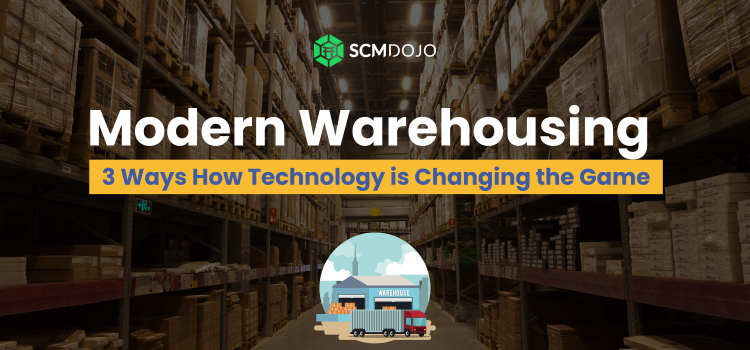
Modern warehousing has come a long way, and technological advancements have played a significant role in the evolution of the industry. With new technologies and advances in distribution center design, modern warehouses are becoming more efficient, accurate, and cost-effective than ever before. In addition, technology integration has enhanced the efficiency and accuracy of warehousing and distribution centers, from internet-connected devices to drones and robots.
Here are three game-changing ways to revolutionize your supply chain through improved warehousing tech in your distribution centers.
Best Warehouse Audit Tool to Improve Performance
Key Takeaways
- Integrating modern technology has made modern warehousing more efficient, accurate, and cost-effective.
- Utilizing IoT sensors and WMS technology improves real-time tracking and control, improving modern warehouse operations’ visibility and accuracy.
- Automation and robotics, along with drones, have revolutionized modern warehousing by reducing the need for manual labor, increasing employee safety, and improving inventory accuracy.
Tech Developments in a Modern Warehouse
IoT Sensors & WMS Technology – Leverage Internet of Things Capabilities for Improved Real-Time Tracking and Control
The Internet of Things (IoT) has transformed how we live and work. In modern warehousing, IoT is being used to connect all the warehouse components, from sensors to robots and drones, into one system. As a result, IoT helps optimize the modern warehouse’s operations, monitoring the temperature, humidity, and location of goods, and the control of energy use. IoT has also made it possible to automate some of the processes in the warehouse, making it more efficient and accurate.
Since warehouses require excellent efficiency and control, one trend that is catching on at a rapid pace is the utilization of sensors and Warehouse Management Systems (WMS) to easily track assets. IoT sensors are used in automated warehouses and distribution centers to monitor assets in real time while they’re being moved around the warehouse. That way, you can continuously monitor critical processes like inventory tracking and asset management. By leveraging modern technology, managers can get improved visibility into warehouse operations with improved accuracy and speed. Additionally, accurate tracking ensures fewer errors to keep the business running smoothly.
Automation & Robotics – Replace Manual Labor with Automation to Increase Output & Efficiency
Robotization is another technological development that has revolutionized modern warehouse design. Robots can perform repetitive tasks more efficiently and accurately than humans, such as picking and delivering goods. They can also work 24/7 without getting tired, which helps speed up the warehouse processes. Robotization has made it possible to automate many processes in the warehouse, making it more efficient and reducing the need for human labor.
Automation and robotics are becoming an integral part of warehouses and distribution centers to reduce manual labor, increase employee safety, efficiency, and accuracy. Compared to manual labor, automation eliminates errors and reduces the time taken to complete a task. Automation can also be applied across different types of materials handling operations, leading to greater gains in productivity.
Drones & Modern Warehousing – Stock Counting, Inventory Control and Picking of Goods
The use of drones in modern warehouses is becoming increasingly common, with their applications ranging from security to inventory control and stock counting. With the help of drone technology, warehouse managers can more easily gain an accurate count of their goods. By utilizing a combination of video cameras and infrared cameras, drones can identify and make a precise count of the stocked items within minutes. This helps managers comply with safety guidelines laid down by regulatory standards and can also be used for picking goods for dispatch. Drones can also facilitate better inventory accuracy by recording data on existing goods, reducing the time it takes to audit your storerooms.
Drones have become increasingly popular in recent years and have found their way into modern warehousing. Drones are being used for stock counting, inventory control, and picking of goods in the warehouse. They can fly around the warehouse and scan barcodes, making inventory control much more efficient. Drones can also be used for short-distance deliveries, such as delivering blood in African countries, making it possible to reach remote areas that are hard to access by traditional delivery methods.
Final Thoughts on Modern Warehousing Techniques and Technology
In conclusion, modern warehousing has come a long way, and technological advancements have played a significant role in its evolution. From IoT to drones and robotization, the integration of technology has enhanced the efficiency and accuracy of warehousing and distribution centers. These technological developments have numerous benefits, including increased efficiency, accuracy, and reduced costs. As technology continues to evolve, we can expect even more exciting developments in a modern warehouse design in the future.
If you wish to learn even more about Modern Warehousing, then click on the button below to access our full-length comprehensive course taught by Paul Denneman, titled “Modern Warehousing & Distribution Centers”.
Modern Warehousing & Distribution Centers
For more insights into Warehouse Management, check out our YouTube channel for more related content right here!
Modern Warehousing Technology FAQs
How do IoT sensors and WMS systems improve modern warehouse operations?
IoT sensors connected to a Warehouse Management System (WMS) track assets, inventory, and environmental conditions (such as temperature and humidity) in real time. This end-to-end visibility speeds up order processing, minimizes manual data-entry errors, optimizes facility energy use, and maintains accurate inventory records across distribution centers.
What are the primary benefits of introducing robotics and automation in distribution centers?
- Increased Output & Speed: Automated systems and robots handle repetitive tasks like picking, sorting, and goods transport 24/7 without fatigue.
- Enhanced Safety: Reduces physical strain and workplace accidents by automating heavy lifting and high-risk material handling.
- Higher Accuracy: Eliminates human error during order selection and inventory movements.
- Labor Optimization: Shifts human workers from manual, repetitive labor to higher-value supervisory and problem-solving roles.
How are drones used inside modern warehouses?
Drones equipped with optical sensors, optical character recognition (OCR), and barcode/RFID scanners fly through warehouse aisles to automate stock counting and inventory auditing. They capture accurate inventory data in minutes rather than days, access high vertical storage racks safely, and assist with pick-verification tasks without requiring manual scissor lifts or scaffolding.
What key technologies are transforming modern distribution center design?
Modern facility design centers around three main technology pillars:
- Internet of Things (IoT): Real-time environmental monitoring and equipment telemetry.
- Autonomous Robotics & Automation: Automated Guided Vehicles (AGVs), Autonomous Mobile Robots (AMRs), and automated picking systems.
- Aerial Drones & Automated Vision: Rapid stock auditing, barcode scanning, and perimeter security.
Does adopting warehouse automation eliminate the need for human personnel?
No. While automation reduces the demand for basic manual labor, it shifts workforce needs toward skilled roles. Human personnel are essential for managing system exceptions, conducting maintenance on robotics, analyzing WMS data, managing complex supplier relationships, and overseeing overall facility operations.
About the Author – Dr. Muddassir Ahmed
Dr. Muddassir Ahmed is a globally recognized supply chain expert, thought leader, and keynote speaker. As the Founder & CEO of SCMDOJO, he has built one of the world’s leading platforms dedicated to empowering supply chain professionals with cutting-edge knowledge, practical tools, and access to expert insights. With over 19 years of leadership experience spanning the UK, Europe, the Middle East, and Southeast Asia, Dr. Ahmed has held key roles at Bridgestone, Doncasters Group, Eaton, and Volvo Cars, managing multi-million-dollar supply chain operations.
His expertise spans all facets of supply chain management, with a particular focus on leveraging technology and innovation to optimize processes and build resilient supply chains.
Recognized among the Top 10 Supply Chain Influencers in the World by Supply Chain Digital, Dr. Ahmed has been instrumental in shaping industry best practices through his extensive research, vlogs, and thought leadership. Holding a PhD in Management Science from Lancaster University Management School, he is also a certified Six Sigma Black Belt.
His platform, SCMDOJO, serves a vibrant community with over 51,000 monthly visitors. Moreover, he has 72,000 newsletter subscribers, and a social media following exceeding 105,000 supply chain professionals
A sought-after keynote speaker and thought leader, sharing his insights on industry trends, best practices, and the future of supply chain management. Dr. Ahmed delivers high-impact talks on supply chain excellence, digital transformation, and strategic leadership. His mission is clear: to help supply chains thrive
You can follow him on LinkedIn, Facebook, Twitter