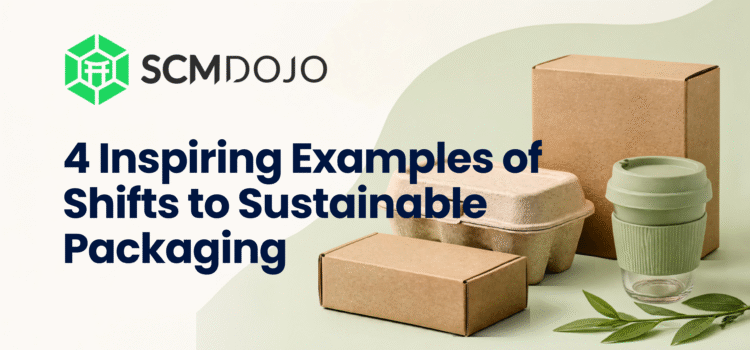
As manufacturing and supply chain professionals all of us at some point had looked for Sustainable Packaging Examples.
While the world still faces dramatic environmental challenges, there has been a positive shift with states across the globe taking steps to address the problems. Shaun Bryce from Melbourne Packaging Supplies shares ways in which the packaging industry is changing and the positive impact it’s going to have on the environment
4 Sustainable Packaging Examples
-
The Adoption of OXO in Jamaica
The Jamaican Government made a bold move and imposed a ban on specific categories of plastic packaging materials. These included plastic bags, plastic drinking straws, and Styrofoam.
One of the solutions on offer in the Jamaican packaging market was there to fill the gap when the legislation was implemented. Oxo-biodegradable plastic (OXO) emerged as a prime solution thanks to its unique features. The OXO plastic degrades when it is discarded as litter and deteriorates more quickly than traditional plastics.
The reason is the polymers in OXO plastic contain prodegradant catalysts. These ingredients enable them to degrade and biodegrade when placed in an open environment. For those looking for degradable plastics as a solution for their industrial packaging needs, it opens up possibilities. The shelf life of the material can be determined at manufacture and primed to degrade when in the open environment. OXO plastic packaging weighs the same as conventional plastic, is the same strength and can be recycled along with other plastic waste. This is one of those sustainable packaging examples where the most environmentally troublesome materials are used.
2. Innovation in Industrial Barrier Film Solutions
Protecting product aroma and scent from being contaminated is a challenge. Mondi has launched a new industrial barrier film solution that will help businesses reduce the amount of packaging required to do this. This will help them achieve sustainability goals by reducing the impact and scale of shipping products.
The product range includes pre-formed tubes and bags that make use of blown film extrusion technology and have a unique film structure. It makes them more stable and offers improved product protection and improved material stability. The multilayer films include a nylon, which creates an impenetrable barrier for moisture, scent and gas.
The sealed films are more durable and tighter than conventional alternatives. They are also able to extend the shelf life of products, which makes them a viable option for foods, cosmetics, and the chemical and agricultural industries. Lines include a pre-formed tube with side gussets. These can be used in automated form, fill and sealing production and can be printed on in six shades. They also offer the benefit of anti-slip embossing, which can simplify the palletization process.
Other films can be used for pre-formed bags that need to be filled manually. They are resistant to flex-cracks, which makes them a suitable alternative to aluminum. They will prove to be popular with pet food companies and the pharmaceutical market. They can also be printed on in up to six colours.
3. New Heavy-duty Fiber for Soft Robotics and Packaging Materials
Researchers at North Carolina State University have developed a new heavy-duty fiber that has the elasticity of rubber combined with the strength of a metal. They say that the fiber has the best of both worlds. It has improved stretch without losing the ability to endure strain. This is thanks to a gallium metal core covered by elastic polymers.
The polymer sheath absorbs the strain that occurs in breaks in the metal caused by tension. They then transfer the stress back to the metal core. In practice, this means the fiber won’t snap and drop heavy weights. Instead, it would release energy through internal breaks repeatedly. The fiber would lower the weight slowly and steadily, says the research team.
The gallium core is also conductive. They are excited by its potential use in soft robotics and how it can be woven into textiles.
4. Coconut Fibre is the Business
Coconut fibre is used to make coquim. Natural latex that is made from the sap of the rubber tree is also added to produce the final material. The good news is that it is renewable and fully biodegradable. It’s also safe, which means it can be used for cooking (pots), and the manufacture of plates and blankets. Coconut fibre, or coir, is the fibrous material between the internal shell and the outer coat of the coconut. It is relatively waterproof and is resistant to seawater.
The material was inspired by xaxim, which is used to make pots. It uses raw material sourced from a fern plant, which is now endangered and therefore can no longer be exploited for commercial use. Coquim has similar properties to xaxim. It can retain water and nutrients and is a natural fungicide.
As a natural fibre the popularity of coquim is increasing and it’s being used in footwear, architecture, the automobile industry and more. It’s also being used for industrial packaging, where it is making a big impact as a substitute for synthetic, polluting and non-renewable materials. This is one of those sustainable packaging examples which I am sure not many people are aware about it!
A sustainable supply chain is the result of processes that meets the needs of the present without compromising the ability of future generations to meet their own needs. These Sustainable Packaging Examples is one process step toward that and we all should use these examples to get inspired and think towards how to achieve Sustainable Packaging for our products.
Frequently Asked Questions (FAQs) About Sustainable Packaging
What are the key sustainable packaging innovations discussed?
- Oxo-biodegradable (OXO) Plastics: Plastics designed with additives to break down faster in open environments.
- Industrial Barrier Films: Multi-layer, lightweight films that protect product scents and moisture while extending shelf life.
- Heavy-Duty Gallium Fibers: Stretchable, high-strength fibers designed to handle heavy loads without snapping abruptly.
- Coconut Fibre (Coquim): A renewable, fully biodegradable natural material used as a replacement for synthetic packaging.
How does oxo-biodegradable (OXO) plastic work?
OXO plastic contains prodegradant catalysts within its polymer structure. When discarded in an open environment, these ingredients cause the plastic to break down much faster than traditional plastics. It retains the same weight, strength, and recyclability as conventional plastic during its intended shelf life. (Note: Globally, OXO plastics remain controversial because they break down into microplastics rather than fully organic matter).
How do industrial barrier films help reduce packaging waste?
Industrial barrier films (such as Mondi’s solutions) use a multi-layer film structure incorporating nylon to form an impenetrable barrier against moisture, gas, and scents. By offering higher durability and tighter seals than conventional options, they extend product shelf life and serve as a lightweight, flex-crack-resistant alternative to aluminum packaging.
What makes the heavy-duty metal-polymer fiber unique for industrial use?
Developed by researchers at North Carolina State University, this fiber features a liquid gallium metal core wrapped in an elastic polymer sheath. It combines the stretchiness of rubber with the strength of metal. When subjected to extreme tension, the fiber does not snap suddenly; instead, the polymer sheath absorbs the strain and lowers heavy weights slowly through controlled internal breaks.
What is coquim, and how is it used in sustainable packaging?
Coquim is a natural, fully biodegradable material made from coconut coir (the fibrous material between a coconut’s inner shell and outer coat) blended with natural latex from rubber tree sap. It is waterproof, resistant to seawater, and acts as a natural fungicide, making it an eco-friendly replacement for synthetic, polluting packaging materials.
Why did coconut fibre replace xaxim in manufacturing?
Xaxim was traditionally harvested from a specific fern plant to make pots and containers due to its water-retention capabilities. However, because that fern species became endangered, researchers developed coquim from coconut fibre as a renewable alternative that offers the same water- and nutrient-retaining properties without damaging endangered ecosystems.
Tubi – Watch Free Movies & TV Shows


Recommended Reading
Designing Sustainable Packaging

About the Author- Dr Muddassir Ahmed
Dr. Muddassir Ahmed is a globally recognized supply chain expert, thought leader, and keynote speaker. As the Founder & CEO of SCMDOJO, he has built one of the world’s leading platforms dedicated to empowering supply chain professionals with cutting-edge knowledge, practical tools, and access to expert insights. With over 19 years of leadership experience spanning the UK, Europe, the Middle East, and Southeast Asia, Dr. Ahmed has held key roles at Bridgestone, Doncasters Group, Eaton, and Volvo Cars, managing multi-million-dollar supply chain operations.
His expertise spans all facets of supply chain management, with a particular focus on leveraging technology and innovation to optimize processes and build resilient supply chains.
Recognized among the Top 10 Supply Chain Influencers in the World by Supply Chain Digital, Dr. Ahmed has been instrumental in shaping industry best practices through his extensive research, vlogs, and thought leadership. Holding a PhD in Management Science from Lancaster University Management School, he is also a certified Six Sigma Black Belt.
His platform, SCMDOJO, serves a vibrant community with over 51,000 monthly visitors. Moreover, he has 72,000 newsletter subscribers, and a social media following exceeding 105,000 supply chain professionals
A sought-after keynote speaker and thought leader, sharing his insights on industry trends, best practices, and the future of supply chain management. Dr. Ahmed delivers high-impact talks on supply chain excellence, digital transformation, and strategic leadership. His mission is clear: to help supply chains thrive
You can follow him on LinkedIn, Facebook, Twitter