
The Supply Chain as a Service (SCaaS) market has experienced significant growth in recent years, with even greater potential ahead. SCaaS is a technology-driven approach to managing supply chains, offering comprehensive end-to-end solutions for businesses. Let’s delve into this emerging concept.
Companies often outsource or entrust these processes to third-party providers, reaping the abundant benefits of SCaaS. While implementing SCaaS poses challenges, it has demonstrated its effectiveness across industries, fostering company growth, cost reduction, and leveraging cutting-edge technology.
SCaaS offers a strategic impact on business. SCaaS is bundling the current supply chain offerings into a service provided by experts. SCaaS will guide companies to achieve strategic value by improving Manufacturing as a Service, Fulfillment as a Service, and Warehousing as a Service.
[Read More: SCMDOJO’s Supply Chain and Operations Expert Marketplace]
What is Supply Chain as a Service (SCaaS)?
Supply Chain as a Service (SCaaS) is a new approach to managing the complex process of getting products from manufacturers to consumers. It involves outsourcing the entire supply chain function to a third-party provider who manages everything from sourcing raw materials to delivering finished products to customers. This approach allows businesses to focus on their core competencies while leaving the logistics to experts who can optimize the process for efficiency and cost-effectiveness. SCaaS providers typically use advanced technologies like artificial intelligence, machine learning, and blockchain to improve visibility, traceability, and collaboration across the supply chain.
Supply Chain as a Service (SCaaS) Examples Across Industries
Retail Industry
Retailers leverage third-party service providers, external manufacturing systems (EMS), and supply chain IT services (RFID, IoT, barcoding, etc.), allowing them to shift their focus towards core activities like market share and product management. Companies with advanced supply chain practices excel in delivering quality third-party logistics management, SKU optimization, efficient transport management, and swift handling of B2B/B2C shipments. Woolworths, a prominent Australian retailer, utilizes SCaaS to optimize its supply chain operations. In fact, an article titled ‘Supply Chain Crisis’ highlights how SCaaS transforms empty bins (aerials shelves/shelves) into cash for companies.
Healthcare & Insurance
Hospitals, clinics, and medicine manufacturers globally grapple with the issue of adulterated raw materials, leading to delays in vaccine, medicine, and healthcare product production. SCaaS offers a solution by enabling hospitals to engage in strategic procurement, ensuring standardized operations throughout the contract duration. This partnership improves inventory management, particularly for medicines with limited shelf life, utilizing dedicated storage facilities. Mayo Clinic, Johnson & Johnson, and Pfizer are among the organizations leveraging SCaaS. Furthermore, industries such as food, hospitality, construction, infrastructure, and even government sectors are gradually adopting SCaaS for improved outcomes.
Components of SCaaS
For efficient management, all the crucial nodes of the supply chain network are outsourced, constituting the essential components of SCaaS.
SCaaS: Supplier Relationship Management
SCaaS – Supplier Relationship Management (SRM) empowers professionals to efficiently manage company suppliers. However, many companies lack awareness regarding supplier onboarding, selection, and S&OP with supplier management. Moreover, investing, hiring, and assignment can be challenging, leading to complex structures and hindered S&OP with supplier management. According to a paper by Len Prokopets and Ramin Tabibzadeh from Archstone Consulting, initial sourcing transactions can yield a 5% savings.
The supply chain industry recognizes that suppliers are not responsible for a company’s performance, posing significant risks to businesses. By incorporating SRM into SCaaS, companies can avoid being burdened with these risks. SCaaS ensures that suppliers adhere to Service Level Agreements (SLAs) aligned with business values. According to an article by SCMDOJO, SLAs are an underutilized tool in the supply chain.
[Read More: How Service Level Agreements (SLAs) Can Propel Your Supply Chain]
SCaaS: Strategic Procurement
Strategic procurement is the subsequent phase in SCaaS, recognized as a crucial department in supply chain management. It serves as a pivotal area for saving margins and adjusting costs. Two fundamental questions arise: the definition of procurement outsourcing and the most efficient approach to its implementation. The business process outsourcing industry has changed scenarios for many industries out there. Procurement and SCM follow the same trajectory where strategic procurement outsourcing encompasses a wide spectrum of activities, encompassing demand and precision management to eProcurement.
Procurement outsourcing helps the company secure aggregate demand for multiple customers at the lowest price. Infosys, India’s billion-dollar company is the one of the leading procurement outsourcing companies in the world, followed by Accenture and IBM. The optimized way of procurement outsourcing is dividing the segment in two parts:
- Strategic Procurement
- Transactional Procurement.
Strategic procurement outsourcing involves the application of innovative techniques by third-party providers. These include bulk-break purchasing, facilitating connections with reliable clients, and renegotiating with existing suppliers to reduce procurement costs. Another benefit is the provision of technology and system support by providers to enable efficient eProcurement processes. On the other hand, transactional procurement outsourcing entails tasks such as validating time and expense sheets, managing materials and service records, and assessing supplier financials. Ultimately, the goal is to create value through procurement outsourcing.
SCaaS: Planning & Demand Management
Measurable outsourcing provides companies with a cost-cutting solution. By outsourcing non-core activities, including supply chain management, to expert solution providers, companies can focus on their core functions. Supply chain planning and demand management are pivotal in meeting customer demands, especially in unpredictable markets. Supply Chain Planning as a Service has emerged as a game-changer, enabling companies to efficiently outsource non-core activities.

Why outsource Demand Planning?
Demand planning outsourcing is one of the most highly discussed topics when it comes to SCaaS. The following are a few of the reasons to outsource demand planning:
Sapping Time & Resources
The integration of a global supply chain has sparked a data-driven revolution in supply chain management. Businesses often invest significant time and resources in sorting and monitoring data collected from omnichannel distribution, which detracts from their core activities.
Lack of Technical Knowledge
Companies often require technical assistance when implementing recommendations in their systems. During such instances, consultancy firms identify issues and offer expertise to resolve them within the allocated budget.
SCaaS: Inventory Management
Achieving inventory optimization provides a competitive advantage and opens up opportunities for improving supply chain Key Performance Indicators (KPIs) through enhanced management. The reason for considering inventory outsourcing stems from the challenges companies face, such as inventory bottlenecks, within their multi-echelon distribution networks.
In a study conducted by Nicholson et al. in 2002, a comparison was made between in-house inventory management and outsourced inventory management in hospitals with omnichannel distribution networks. The findings of the study concluded that outsourcing inventory management not only lowers inventory costs but also maintains high quality levels.
Inventory management can be outsourced by transferring comprehensive information from A to Z to a consulting firm. It is advisable to begin with a gradual approach, starting with software integration and gaining an understanding of the company’s existing inventory management practices. Identifying weak points within the distribution network is also crucial for effective outsourcing.
[Read More: 7 Reasons to Hire a Supply Chain Consulting Firm]
Challenges in Implementing SCaaS
One of the all-time challenges in SCaaS comes with the apprehension of having tech platforms catering to various responsibilities as an idea and not necessarily implementing the technology itself. What adds to the challenge is when the entire process is outsourced to a third party who would look more into the critical areas of your business.
Resistance to Change
Adapting to the latest technology or outsourcing critical domains of your business to a third party can be perceived as complex due to the inherent difficulty of embracing change. People often prefer the comfort of familiar routines and may resist unfamiliar processes. Implementing new technology, methods, or systems can be particularly challenging as they introduce unfamiliarity and disrupt established norms.
Not Everyone is an Expert
Companies often hold the belief that they possess the expertise to handle all functions internally more effectively than external experts. While there may be instances where internal implementation yields desired outcomes, it is often associated with cost-cutting measures. It is important to acknowledge that not everyone is an expert in all areas. Therefore, outsourcing can prove to be a beneficial approach, as specialized companies possess the proficiency to employ cutting-edge technology and skilled professionals in the respective field.
Companies Providing Supply Chain as a Service
Supply Chain as a Service (SCaaS) has seen a growth trajectory due to the rise in ecommerce and supply chain crisis in 2020. As mentioned, in India companies like Infosys, Accenture, and TCS are providing procurement and supply chain consultancy to many retailers, businesses and organizations.
SCaaS and SCMDOJO: World’s First Supply Chain Expert Marketplace
SCMDOJO’s Expert Marketplace introduces a groundbreaking solution that combines the power of marketplaces with Supply Chain as a Service (SCaaS). By harnessing advanced technologies and innovative features, this platform revolutionizes the way businesses access supply chain expertise and services. With its unique value proposition, including cost savings for clients, earning opportunities for experts, and integration into a vibrant supply chain community, SCMDOJO stands out in the industry. The platform’s comprehensive features, trust and safety mechanisms, project management capabilities, and commitment to excellence are set to transform how businesses tackle their supply chain challenges, drive efficiency, and achieve strategic objectives. Embracing this pioneering solution unlocks enhanced collaboration, streamlined processes, and unparalleled access to top-tier supply chain experts, empowering businesses to thrive in the dynamic global market and achieve sustainable growth and success.
Some of the Expert Services Our Marketplace Offers
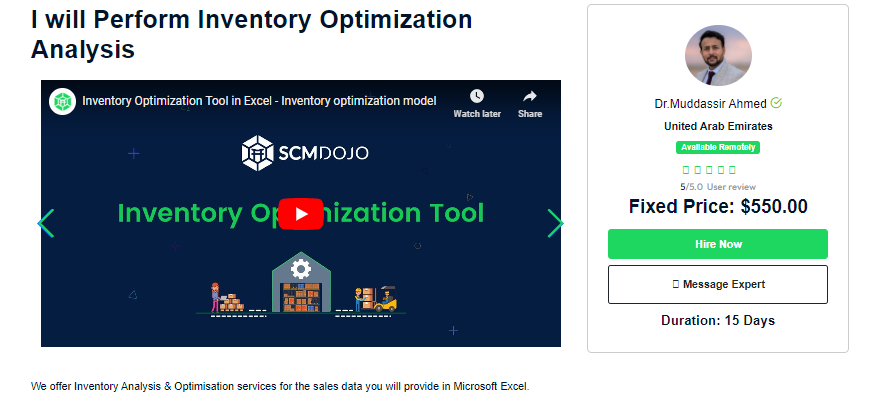
Inventory Optimization Analysis
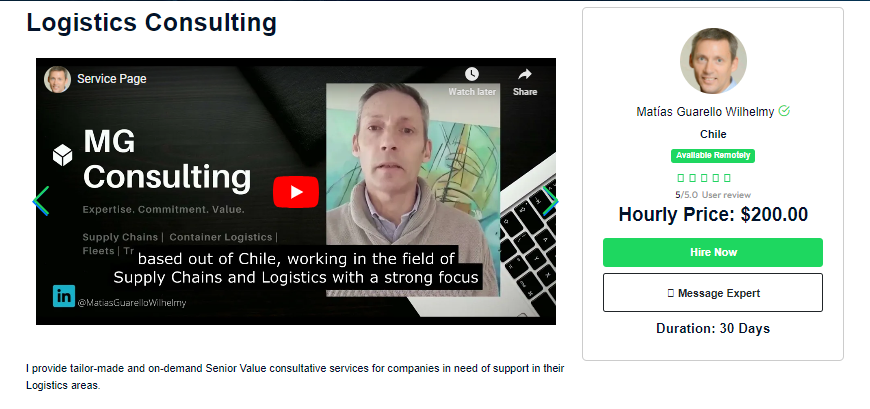
Logistics Consulting
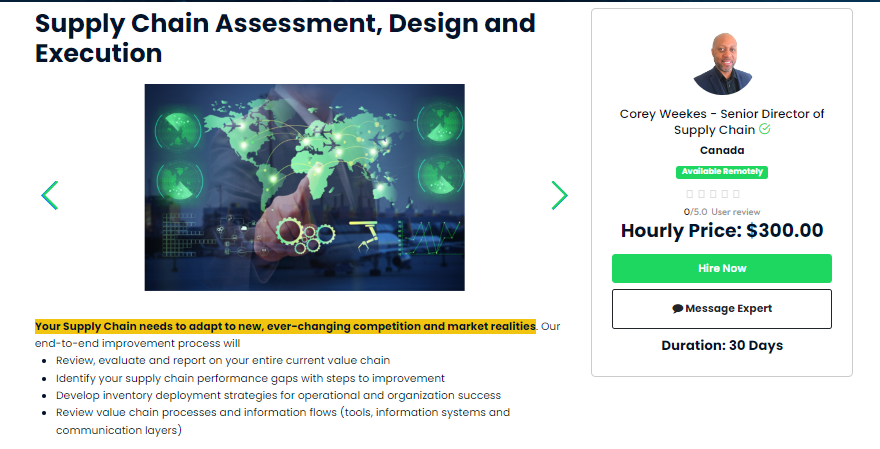
Supply Chain Assessment, Design and Execution
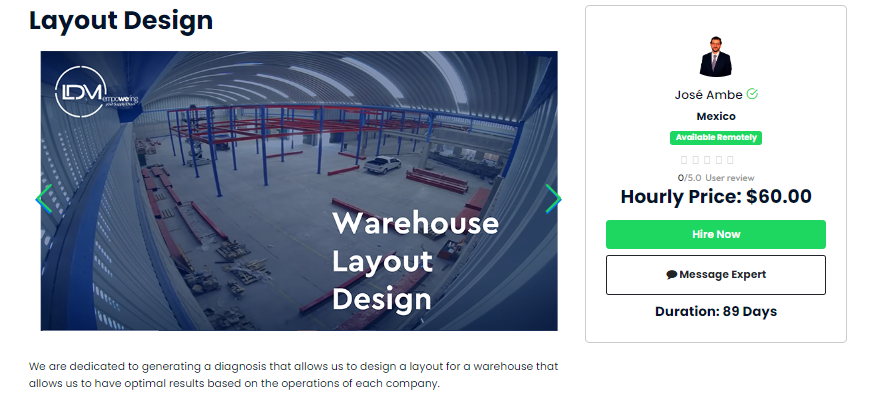
Warehouse Layout Design
Data Strategy Call
Conclusion
Supply Chain as a Service (SCaaS) introduces a fresh opportunity for CSCOs and their organizations to assume a strategic role. By enhancing existing capacity and capabilities, CSCOs can boost revenue and minimize costs, offering these services to manufacturers, retailers, and other organizations aiming to enhance their supply chain operations. Forecasts suggest that the SCaaS market will reach nearly 7 billion USD by 2025.
Surely a golden opportunity for the supply chain industry to tap into!
Supply Chain as a Service (SCaaS) FAQs
What is Supply Chain as a Service (SCaaS)?
SCaaS is a business model where an organization outsources part—or all—of its end-to-end supply chain processes to specialized third-party providers. Operating similarly to Software as a Service (SaaS), SCaaS leverages cloud platforms, AI, and advanced analytics to give companies flexible, pay-as-you-go access to procurement, logistics, demand planning, and warehousing without requiring heavy capital investments in physical infrastructure or technology.
What are the main components that make up SCaaS?
SCaaS typically bundles four major operational areas:
- Supplier Relationship Management (SRM): Ensuring third-party vendors meet strict Service Level Agreements (SLAs) and aligning supplier performance with business goals.
- Strategic Procurement: Outsourcing sourcing activities—such as aggregate demand purchasing, contract negotiation, and eProcurement—to drive down material costs.
- Planning & Demand Management: Utilizing data-driven forecasting to align inventory production with real-time market demand.
- Inventory Management & Warehousing: Offloading physical storage, order fulfillment, and multi-echelon network tracking to optimize stock levels and prevent bottlenecks.
How does SCaaS differ from traditional Third-Party Logistics (3PL)?
While traditional 3PLs primarily execute tactical tasks like storing goods in a warehouse or trucking items from point A to point B, SCaaS is a digital-first, holistic solution. SCaaS providers take over control tower management, strategic planning, technological infrastructure, and end-to-end data integration across the entire supply chain network.
Why are companies increasingly outsourcing demand planning to SCaaS providers?
Managing vast amounts of omnichannel data requires significant technical expertise and resource bandwidth. Companies outsource demand planning to SCaaS partners to leverage specialized AI tools, data analytics expertise, and sophisticated forecasting algorithms without diverting internal teams away from core competencies like product development and brand marketing.
What are the primary challenges of adopting SCaaS?
- Loss of Operational Control: Entrusting core strategic and operational functions to an external entity can cause hesitation regarding data privacy and oversight.
- Internal Resistance to Change: Moving away from legacy systems and comfortable in-house routines often faces pushback from internal teams.
- Overestimating In-House Expertise: Companies often mistakenly believe they can manage every complex technological node internally at a lower cost, ignoring the specialized infrastructure expert providers bring.
What is the market outlook for Supply Chain as a Service?
Driven by global e-commerce growth, geopolitical supply disruptions, and the rapid rise of AI-driven analytics, the SCaaS market is expanding rapidly. Valued at over $13 billion, the market is projected to reach well over $20–25 billion by 2030 as small and medium-sized enterprises (SMEs) increasingly adopt subscription-based supply chain models to compete with industry giants.
About the Author – Dr. Muddassir Ahmed
Dr. Muddassir Ahmed is a globally recognized supply chain expert, thought leader, and keynote speaker. As the Founder & CEO of SCMDOJO, he has built one of the world’s leading platforms dedicated to empowering supply chain professionals with cutting-edge knowledge, practical tools, and access to expert insights. With over 19 years of leadership experience spanning the UK, Europe, the Middle East, and Southeast Asia, Dr. Ahmed has held key roles at Bridgestone, Doncasters Group, Eaton, and Volvo Cars, managing multi-million-dollar supply chain operations.
His expertise spans all facets of supply chain management, with a particular focus on leveraging technology and innovation to optimize processes and build resilient supply chains.
Recognized among the Top 10 Supply Chain Influencers in the World by Supply Chain Digital, Dr. Ahmed has been instrumental in shaping industry best practices through his extensive research, vlogs, and thought leadership. Holding a PhD in Management Science from Lancaster University Management School, he is also a certified Six Sigma Black Belt.
His platform, SCMDOJO, serves a vibrant community with over 51,000 monthly visitors. Moreover, he has 72,000 newsletter subscribers, and a social media following exceeding 105,000 supply chain professionals
A sought-after keynote speaker and thought leader, sharing his insights on industry trends, best practices, and the future of supply chain management. Dr. Ahmed delivers high-impact talks on supply chain excellence, digital transformation, and strategic leadership. His mission is clear: to help supply chains thrive
You can follow him on LinkedIn, Facebook, Twitter






Outsourcing in Supply Chain: A Complete Strategic Guide - Garment District News
[…] supply chains become more complex and global, outsourcing, particularly through models like Supply Chain as a Service (SCaaS), continues to evolve. Companies are increasingly seeking external partners to enhance resilience, […]